


Solar energy is a frequent target of libertarians. Movement think tanks like the Cato Institute periodically issue weighty missives against solar and other renewables, lamenting the high cost of government subsidies. It is also frequently pilloried in the pages of Reason Magazine, the premier libertarian publication, on similar grounds. A recent article called solar adoption the result of “unscientific green fantasies”.1
The criticism is unfair. The deployment of solar energy indeed relies partly on government subsidies - a policy that runs counter to libertarian, small-government sensibilities. But solar subsidies in aggregate are tiny in comparison to those showered upon fossil fuels and nuclear.2 And - unlike coal, oil, and fossil gas - solar delivers a substantial public benefit in the form of cleaner air and a more stable climate.
More important to libertarians, however, is solar energy’s most underappreciated characteristic: its ability to enable the individual over the collective. Most energy technologies are unable to deliver economically competitive energy services at small scales. Coal, gas, nuclear, and wind generating plants must be very large (100MW-4GW) and must distribute their electricity through heavily regulated, centralized grids. This complex structure is organized by a utility company, which typically has monopoly power and more often than not is directly state-owned.
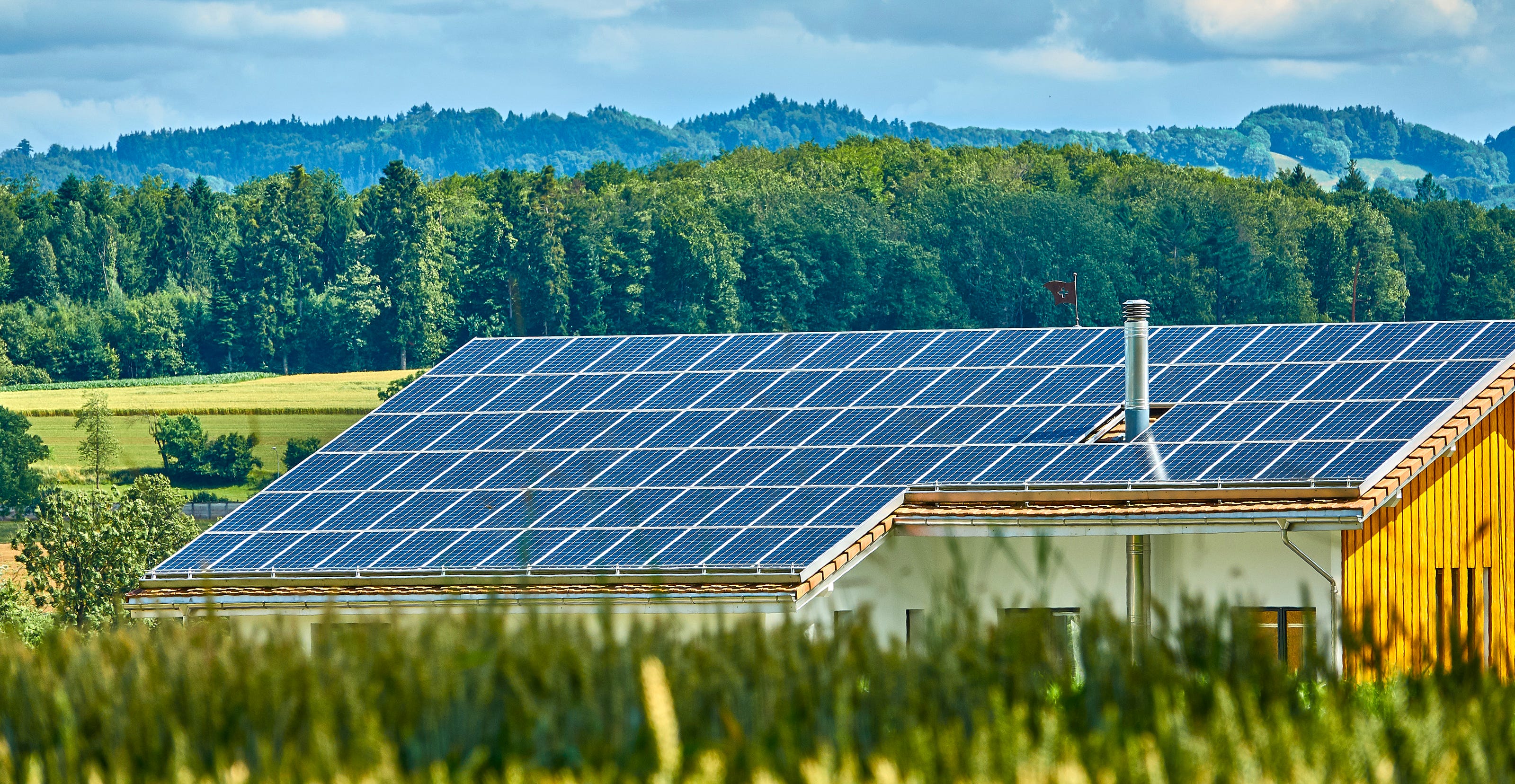
Solar energy is different. Solar panels are most economically efficient when arranged into large generation plants connected to the grid. But they work perfectly well at smaller scales too - from neighborhood-scale community solar to commercial rooftops and individual residences.
Paired with batteries, a solar + storage system is technically capable of providing a household 24/7/365 electricity supply in any climate, though the economics are more favorable in sunny locales. Solar panels are rated to last 30 years, but are thought to retain 50% of their capacity for 100 years, making them multi-generational assets. The electricity they produce flows - untaxed - into a property owner’s home in perpetuity with zero fuel dependency.
It may always be cheaper for solar-enabled households to keep a grid connection, particularly at higher latitudes where solar resource is low in winter. But for a certain price, solar gives anyone the ability to opt out of the electricity grid entirely. And individuals gaining the ability to opt out of dystopian government monopolies is a development that should be welcomed by all libertarians and small-government conservatives.
Get Earthview in your inbox:
And consider a paid subscription to get premium analysis and support our work!
Atlas Plugged
Additionally, the solar self-sufficiency revolution is about much more than mere electricity. Solar panels can power a range of energy services in a fully electrified home that are currently absent from the residential market or reliant on dirty, fuel-dependent fossil systems.
Electric heat pumps, for example, are essentially air conditioners that can provide heating as well as cooling. A large ground-source heat pump can entirely replace a gas furnace, even in the coldest climates. Throw in an induction stove, and households can eliminate their fossil gas connection entirely.
Solar panels also enable independence from the gasoline pump. A solar-powered home paired with an electric vehicle (EV) makes it possible to rely on nothing but the sun for personal transportation. Moreover, solar can provide fresh water by powering wells which tap underground aquifers or a whole-house rainwater harvesting system. A new generation of atmospheric water generators (AWGs) makes enough drinking water for an entire family from nothing but solar-generated electrons and thin air.
Even more revolutionary technologies for self-sufficiency are on the horizon. In future, a large solar array could power highly automated residential robotic greenhouses - producing fresh fruits and vegetables at home with minimal human input. Electric 3D printers will one day allow the fabrication of basic objects and tools at home. On large estates, home-scale plasma gasification systems will allow households to vaporize waste on-site.
The full suite of solar-powered electrified devices is currently only affordable in the wealthiest homes. But that will not always be the case. The cost of solar panels has fallen relentlessly over time, and this trend is expected to continue. The prices of other enabling technologies - particularly batteries - are following a similar trend. In the near future, the suburban middle-class in developed nations will be endowed with a remarkable degree of energy self-sufficiency.
We can see an incipient version of this vision in Australia, which is simultaneously one of the sunniest and wealthiest countries in the world. Around 40% of homes in Australia have solar PV systems installed.3 An increasing number of these homes also have battery storage, helping them to self-consume more of their solar output. Over the next decade, a mass decentralization will occur as a greater share of the nation’s energy is generated and consumed at home.
L’État, C’est Soi
It is worth considering how this decentralization might affect the relationship between an individual and the state. If citizens have a steady supply of energy, water, and food at home, would they be more likely to stand up to an authoritarian regime? Tyrants have since time immemorial used economic insecurity to instill fear and install despotism. What happens when a significant percentage of the population is more economically independent and secure than ever?
It is thought that the first empires - and the first tyrannies - arose in Mesopotamia in order to organize the irrigation of agriculture, itself an exercise in energy collection. Today, some of the most oppressive regimes in the world with regard to individual liberties are petrostates like Russia, Venezuela, and Saudi Arabia. Does the structure of a nation’s energy system influence the nature of its state? Could decentralized solar-powered electrostates lead to increasingly decentralized governance more broadly?
There is very little doubt: the answer to that question is yes. The only real uncertainty is to what degree. It is doubtful that solar energy and its extended ecosystem will - on their own - create a world populated exclusively by autonomous homesteads of the Jeffersonian ideal. But it could meaningfully tilt the balance of power towards individual autonomy.
We live in an era where digital video cameras have enabled mass visual surveillance, the internet and social media have enabled personal data collection on an astounding scale, and artificial intelligence (AI) threatens to foist upon us dystopian monstrosities like social credit scores and predictive policing.
Solar energy is one of the few 21st century technologies that unambiguously advances human freedom. Everyone - especially libertarians - should embrace it.
Get Earthview in your inbox:
And consider a paid subscription to get premium analysis and support our work!