


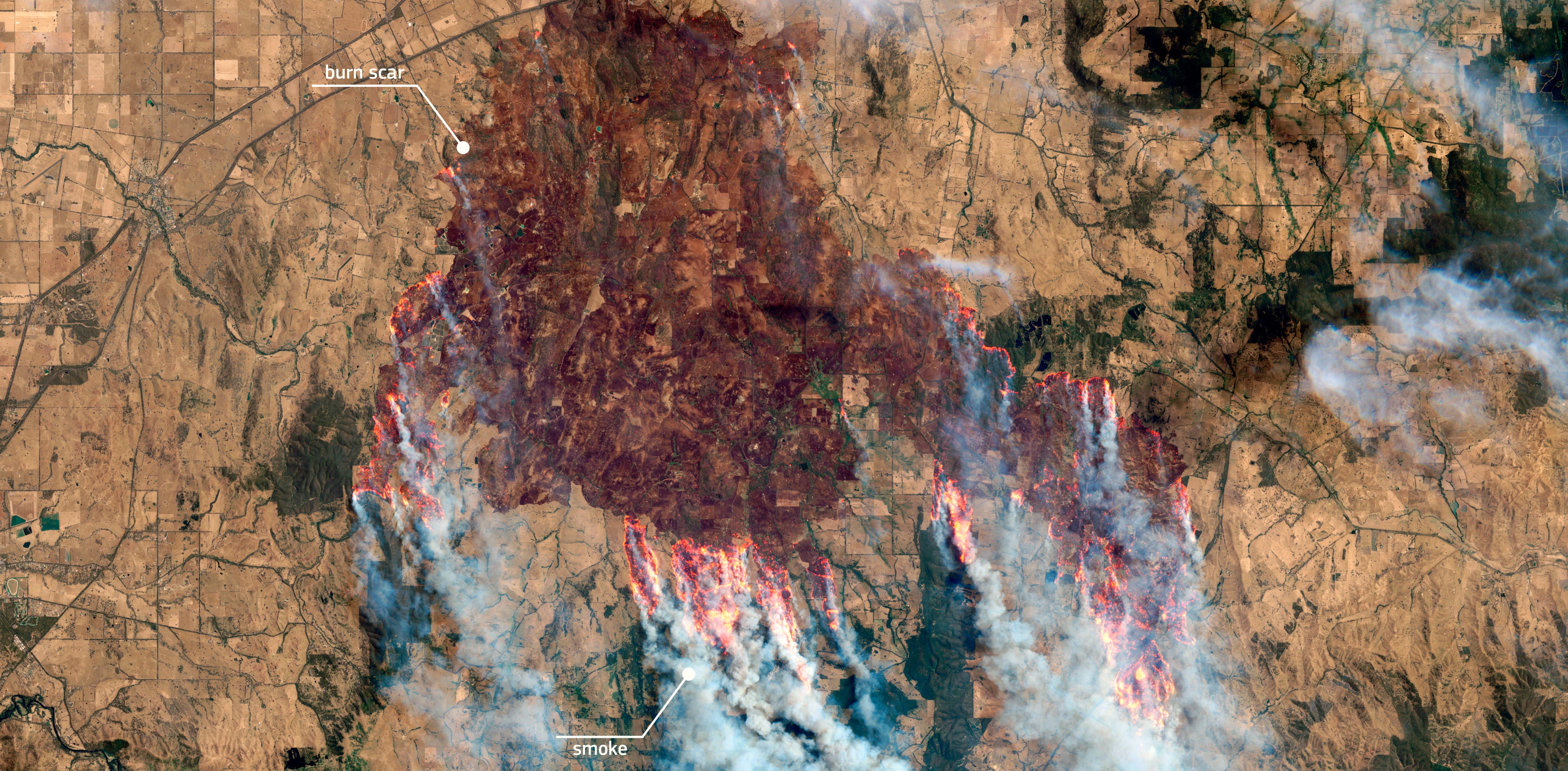
The punishingly hot summer of 2025 has shifted to Earth’s Southern Hemisphere. Over the past few weeks, climate change-driven warming has pushed thermometers to the limit and fueled wildfires in Argentina, Australia, Chile, and South Africa.
Australia has experienced its hottest summer in six years. In late January, parts of Australia reached temperatures of 50°C (122°F) - with several towns in rural Victoria setting all-time record highs. Researchers have determined that the heat wave was made five times more likely due to climate change.1
Meanwhile, wildfires in Chile last month burned 45,000 acres, forced the evacuation of around 50,000 residents, and killed 21 people.2 80% of Punta de Parra, on the Chilean coast, was destroyed as extreme winds turned the picturesque beach town into a blustering inferno.3 Fires in neighboring Argentina have burned 86,000 acres - including ecologically sensitive old-growth forests in Los Alerces National Park, a UNESCO World Heritage Site.4
The Southern Hemisphere’s scorching summer follows an exceedingly warm 2025, which was the third-hottest year on record. The blazing start to 2026 may indicate another record year ahead.
Climate change is the result of human activities that concentrate greenhouse gases (GHGs) in the atmosphere - primarily the combustion of fossil fuels for energy, but also the manufacture of cement, methane emissions from livestock, and deforestation. The only way to halt climate change is to reduce GHG emissions to net-zero.
Get Earthview in your inbox:
And consider a paid subscription to access premium content and support the work we do!