



Last year was the third-hottest year in recorded history, reaching a global average surface temperature of 1.44°C above the planet’s preindustrial 1850-1900 average, according to the World Meteorological Organization (WMO).1
Due to the effects of the El Niño-Southern Oscillation (ENSO) - a natural climate cycle - 2025 was slightly cooler than 2024, which remains the hottest year on record at 1.55°C. But the overall warming trend remains strong. The last three years have been the three hottest years on record.2
The period between 2023 and 2025 experienced an exceptional warming spike that overshot predictions of climate scientists, the cause of which remains under debate. The most important single factor is likely the sudden reduction of aerosol pollution from ships in 2020, which unwound a cooling effect that had hitherto been masking underlying warming.3
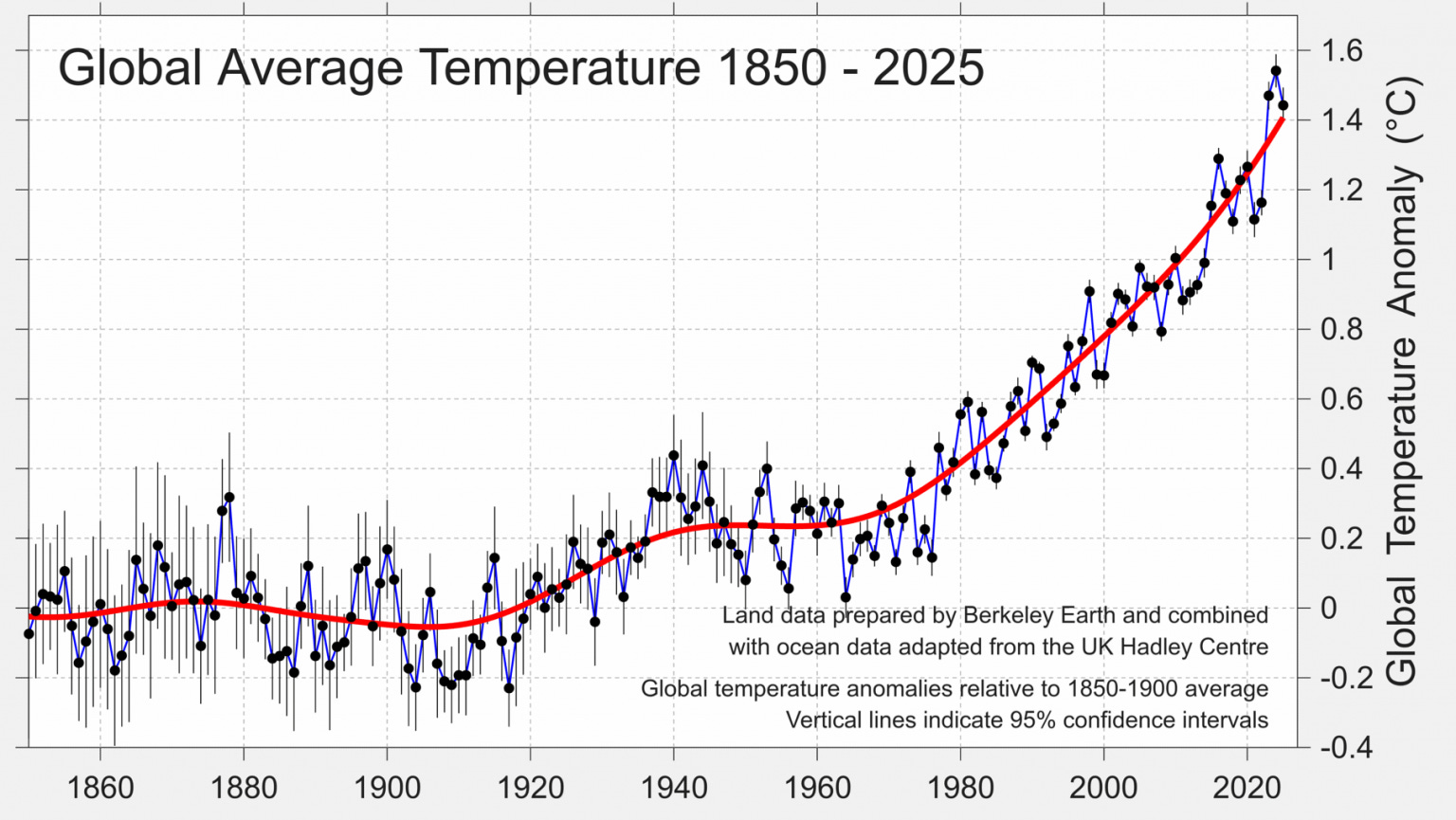
The temperature increases observed since the early 20th century are well understood. Global warming is the result of human activities that concentrate greenhouse gases (GHG) in the atmosphere - primarily the combustion of fossil fuels for energy, but also the manufacture of cement, methane emissions from livestock, and deforestation.
Annus horribilis sempiternus
In 2025, Earth and its inhabitants also endured a remarkable acceleration of climate change impacts. It began in Los Angeles with a spate of highly destructive wildfires in January - a month previously thought to be outside of California’s wildfire season. The fires destroyed over 16,000 structures4, caused $50 billion in direct economic damages5, and killed at least 31 people, with hundreds more estimated to have died from indirect impacts like increased air pollution.6
Late the same month, the United Kingdom and Ireland were struck by Storm Éowyn - an extratropical cyclone and the severest weather event to hit the British Isles since 1961. In Ireland alone insurance losses exceeded €301 million, making Éowyn the most expensive weather event in Irish history.7
On July 4th, flash floods in Texas killed at least 137 people - including 25 young girls aged eight to nine sleeping at a summer camp built on a floodplain.8 In a period between June and September, heavy pre-monsoon and monsoon rains provoked a series of floods in Pakistan, killing about 1,000 people.9
Throughout summer, Europe was hit by a series of unprecedented heatwaves that damaged ecosystems, lowered air quality, sparked numerous wildfires, and killed an estimated 16,500 people.10 The direct economic losses have been estimated at €43 bn ($50.4 bn).11
Typhoons in the Philippines last year killed hundreds and cost $5 bn.12 Hurricane Melissa in the Caribbean - the third strongest Atlantic hurricane in history - killed over 100 and inflicted $10 bn in economic losses.13 In November and December, a sequence of tropical cyclones hit India, Indonesia, and other countries on the Indian Ocean’s periphery, killing over 1,700 and causing $20 bn in damage.14
Each of these events was made likelier, deadlier, and costlier by climate change. Extreme weather will continue to increase in frequency and intensity as humans emit more greenhouse gases into the atmosphere. The only way to halt the trend is to stop burning fossil fuels.
Sign up to get Earthview in your inbox:
And consider a paid subscription to get premium analysis and support the work we’re doing!
ibid.
Solid breakdown of how measurement years don't capture the full story. The LA fires happening in January really underscored how thse seasonal patterns are shifting in unpredictable ways. I've been following the aerosol masking hypothesis since 2023 and it's wild how underreported that whole dynamic is, considering it might explain why models undershot recent warming trends.