


Wildfires in Canada and the United States covered the eastern half of North America with deadly smoke over the weekend, reports The Guardian. Skies turned an apocalyptic orange in major cities like Chicago, Detroit, Toronto, and New York, and nearly 109 million people were exposed to dangerous levels of air pollution.
“Our forecasts show the smoke continuing to move eastwards across the North Atlantic, and potentially towards Europe, highlighting the scale of wildfire pollution and how it can travel thousands of kilometers across borders and impact air quality in places far beyond the fires themselves…”
2. Fossil Phase-Out Key to Fighting Fires
Climate scientists have reiterated that the only way to prevent more massive wildfires is to stop burning fossil fuels, explains CBC News.
“…while firefighting resources are important for protecting local communities—some of which have been completely destroyed in Ontario fires this year—experts say it is not possible to extinguish every fire sending smoke toward major cities.”
Raking and controlled burns alone won’t work. We need to halt climate change. Full stop. –DB
Earthview is a reader-supported publication devoted to climate change and the environment. Please consider a paid subscription to support the work we do and access premium content.
3. Aral Sea’s Death Contributes to Climate Change
The death of the Aral Sea—one of the world’s worst ecological disasters in its own right—is also contributing to climate change, notes Grist. The dry lakebed the size of Ireland has already released 748 million tons of CO2—three times the annual emissions of Spain.
The mounting evidence around these emissions is particularly worrying because it could be a sign of a climate tipping point from which it would become difficult, if not impossible, to recover. “If we keep on doing this kind of stuff, where we are drying up lakes,” said Brothers, “those could take over driving climate change.”
Book of the Week

Wildfire: The Culture, Science, and Future of Fire | Ferin Davis Anderson
Climate change is making wildfires larger and more frequent. Environmental scientist Ferin Davis Anderson helps prepare us for this future by breaking down the science of wildfires and the science of firefighting.
Can modern firefighting techniques mitigate the damage climate change has caused? Or are we destined to live in a pyrocenic prison of our own making? –DB
Buy Now: Bookshop.org 🇺🇸 | Bookshop.org 🇬🇧
Good Climate News
1. Renewable Energy Still the Cheapest
Renewable energy remains the cheapest source of energy in the world, heralds Canary Media. Despite efforts in the United States to destroy renewable energy, it keeps lowering its costs while the price of fossil generation is rising.
The LCOE of gas power from modern “combined-cycle plants”—which was already about $20 higher per megawatt-hour than solar’s and onshore wind’s in 2025—rose by 15%.
2. The Sodium-Ion Revolution is Coming
A new energy storage revolution is kicking off with the advent of sodium-ion technology, relays Nature. Sodium-ion uses cheaper materials than the competing lithium-ion, dramatically lowering the potential price floor for energy storage in the coming decades.
“Sodium is an almost inexhaustible resource,” says Zhang Yizhi, a spokesperson for CATL. It is more than 1,000 times as abundant as lithium in Earth’s crust, and up to 60,000 times as plentiful in the ocean. Last month, industrial-grade sodium carbonate cost only US$200–280 per tonne, compared with $20,000–25,000 per tonne for battery-grade lithium carbonate, Zhang adds.
Sodium-ion also poses a dramatically lower fire risk, obviating the need for expensive fire suppression at the systems level. –DB
3. EU Targets Mass Electrification by 2040
The European Union (EU) released a plan to hit an electrification rate of 46% by 2040, details PV Magazine. This aggressive target can only be met by rapidly phasing out non-electric fossil technologies like gasoline and diesel vehicles, and fossil gas and oil-powered heating.
The action plan aims to address these challenges by narrowing the price gap between electricity and fossil fuels, thereby encouraging the deployment of heat pumps, electric vehicles and battery energy storage systems.
Our Blue Marble
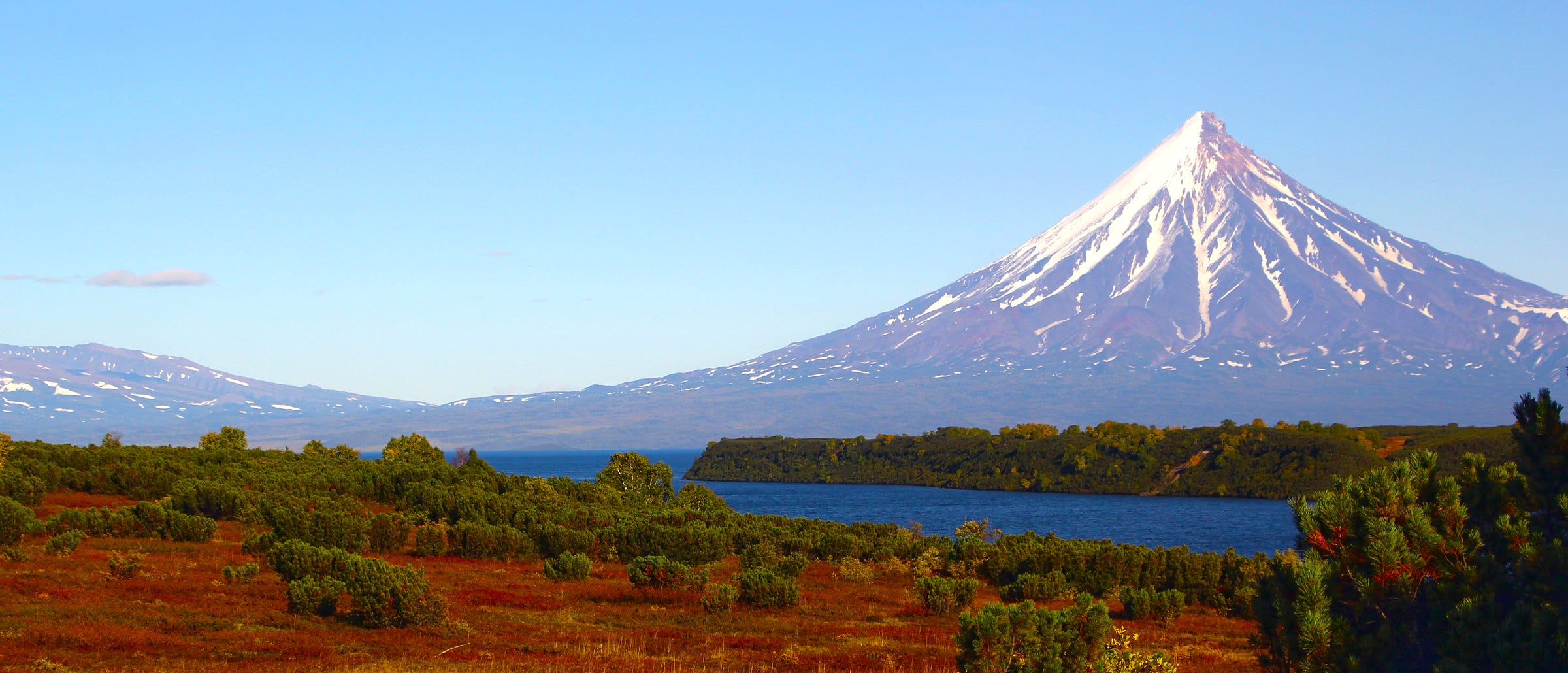
Kronotsky Volcano | Kamchatka, Russia 🇷🇺
54°45′12″N 160°31′36″E
Earthview is a reader-supported publication devoted to climate change and the environment. Please consider a paid subscription to support the work we do and access premium content.
In Brief
🇨🇱 Chile: Communities in the Atacama Desert are researching fog harvesting to help alleviate a chronic drought.
🇨🇩 DR Congo: A new species of monkey has been discovered in the Congo rainforest.
🇮🇩 Indonesia: A new short documentary seeks to explore a patch of rainforest in Borneo before it is bulldozed to make way for a new national capital.
🇺🇬 Uganda: A 900-mile oil pipeline in East Africa that cuts through several important wildlife habitats is nearing completion despite efforts to halt it.
Planetary Pulse
Planetary Health — Latest figures
CO2: 430.78 PPM (+.34% YoY)1 | Temperature Anomaly: +1.42 C
Forest Cover: 31.8% | Protected Areas: 12.3% (17.3% terrestrial, 10.01% marine)
Emissions per Capita: 4.89 (World) | 9.1 (China) | 13.1 (USA) | 6.1 (EU) | 2.1 (India)
Low Carbon Electricity: 43.1% | Low Carbon Energy: 19.8% | EV New Sales : 24.1%2
The Other 74% 🌊
A new study has found that 90% of deep-sea molluscs are contaminated with microplastics, with the worst pollution occurring in the Indian Ocean.
A group of Pacific Island nations in Melanesia has announced plans for a new marine protected area the size of Great Britain—dubbed the Melanesian Ocean Corridor of Reserves (MOCOR).
The US has announced plans to start deep-sea mining in American Samoa.
Meet the Endangered
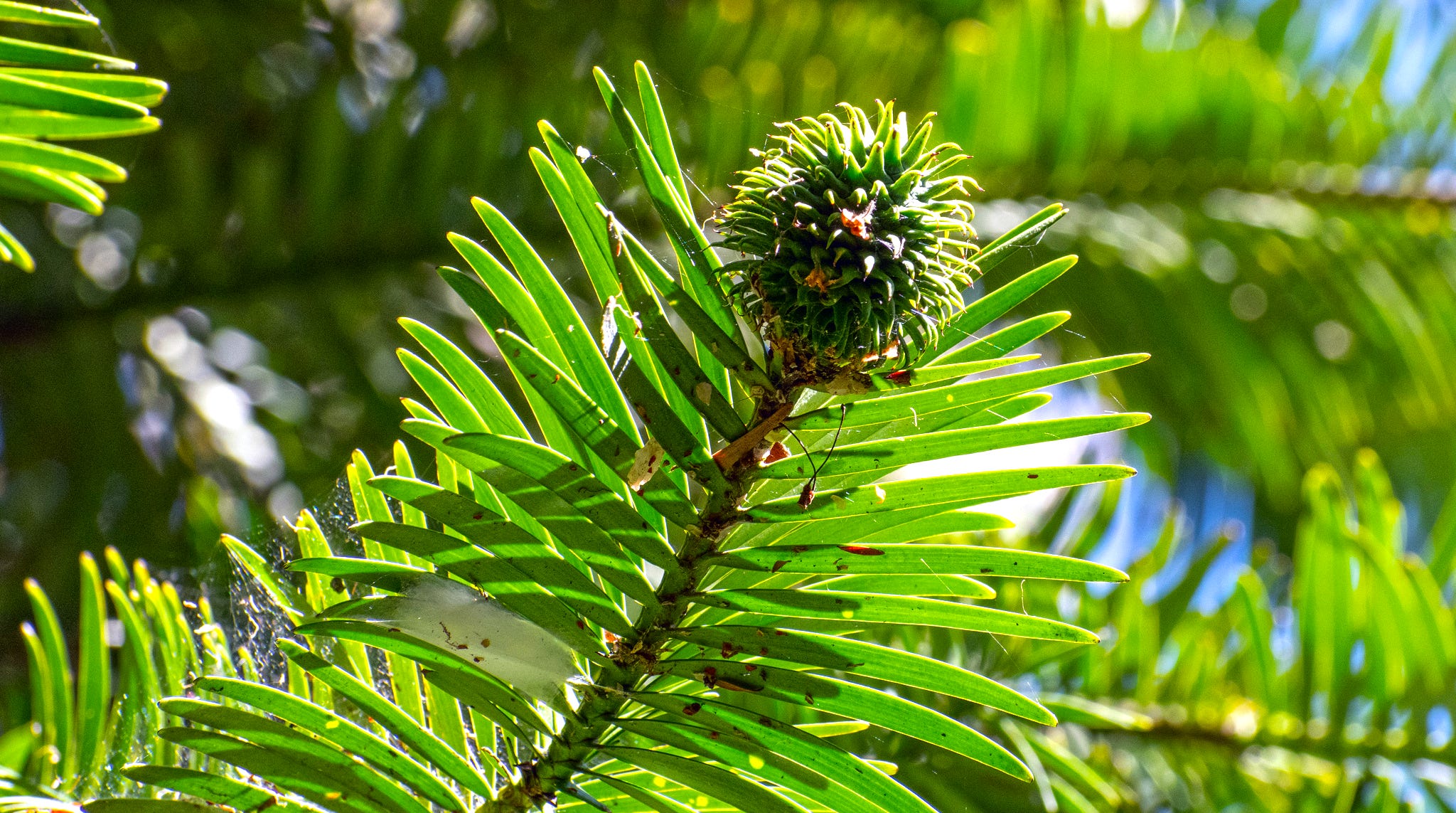
Wollemia (Wollemia nobilis)
The Wollemia tree was thought to have gone extinct 200 million years ago until 1994, when a park ranger in Australia discovered a small grove of live trees growing at the bottom of a canyon.
Sometimes called the Wollemi Pine, the tree is not a true pine but rather a relic species of a different family of conifers that was once more widespread. The exact location of the Wollemia grove is kept secret by the Australian government to guard the vulnerable tree from harvesting or diseases introduced by hikers. A special mission was also arranged to protect the grove from the 2019-2020 bushfires.
Hobbyist gardeners have proven to be useful allies in its conservation. The Wollemia’s beauty and unusual history make it a popular ornamental tree worldwide, creating a genetic reservoir and an important insurance population.
IUCN: Critically Endangered (CR)
Earthview is a reader-supported publication devoted to climate change and the environment. Please consider a paid subscription to support the work we do and access premium content.
Latest daily figures
Latest quarterly global percentage (BEV +PHEV)