



The United States is now investing more in building fossil fuel generation capacity than China, reports Carbon Brief. While China’s fossil investments are stable, the US is seeing a surge due to gas-fired captive data centers.
…strong demand for gas power plants for data centres in the US – and, to a lesser extent, the Middle East – is “limiting the availability of turbines for near-term deployment elsewhere in the world”.
Some of these data center “investments” will never be completed. And by hoarding turbines for themselves, the Americans are forcing other countries to get off gas. But there will be a bump in US power sector gas emissions, and that’s not good for climate. –DB
2. Climate Change Creating Larger Hail
Climate change is creating larger and more damaging hail, explains The Associated Press. Hailstorms with hail larger than a marble are predicted to increase by between 38% and 48% by the end of the century, according to a new study.
Hail generally doesn’t kill people, but it is expensive. It already costs the U.S. about $10 billion a year and around $80 billion globally…Hail does more damage than tornadoes and generally costs “more than a couple hurricanes a year now”…
3. Inside Europe’s Quest for Green Steel
Europe is on an epic journey to replace dirty coal-made steel with hydrogen-made green steel, explains Canary Media. There are many signs of progress — but success is far from assured.
…around 70% of blast furnaces need relining or other major maintenance by 2030. In the EU, over half will by 2035. If they’re relined — extending coal-based production — Europe will miss its climate targets.
Our Blue Marble
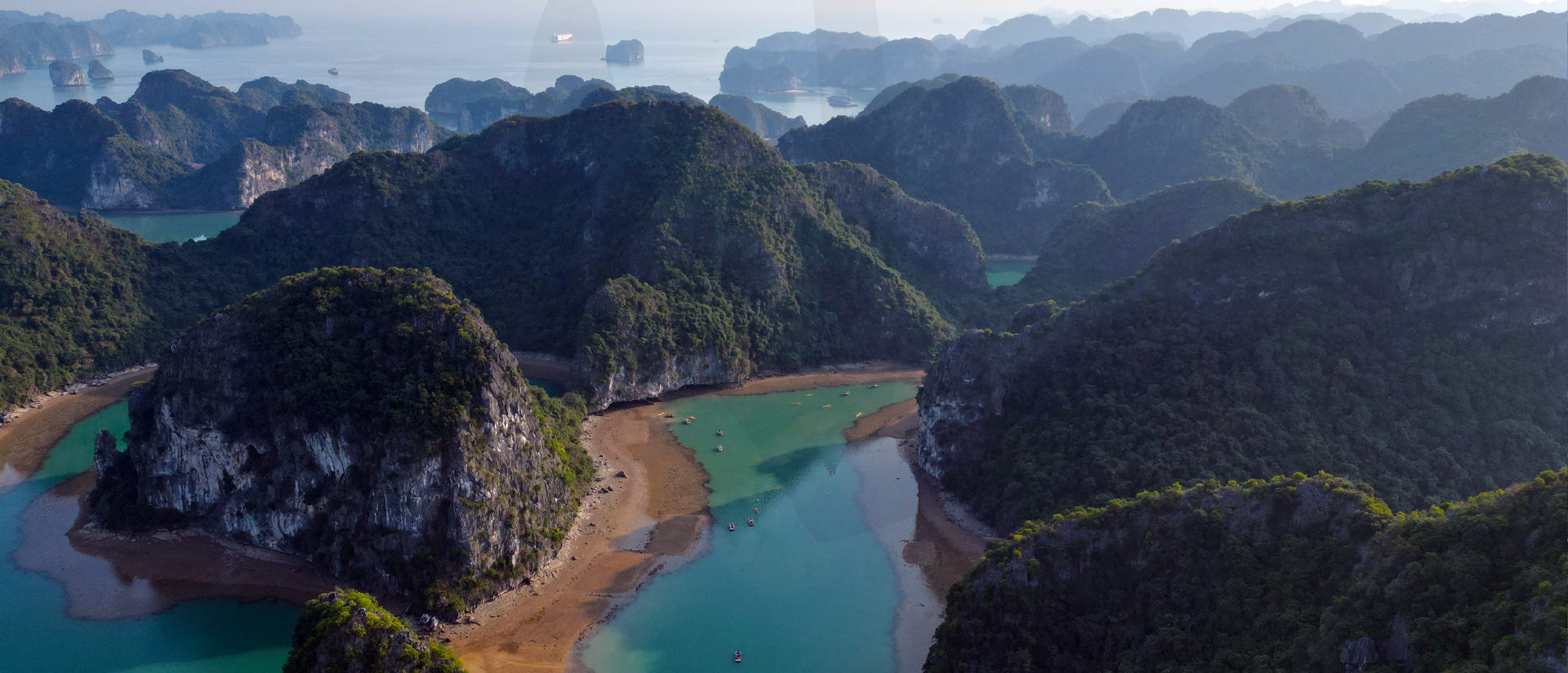
Ha Long Bay | Vietnam
20°54′N 107°12′E
Good Climate News
1. Amazon Deforestation Rate Slows to Six-Year Low
Tougher enforcement has brought deforestation in the Brazilian Amazon to its lowest level since 2019, notes Radio France Internationale.
South America’s biggest country lost 985,000 hectares of native vegetation in 2025 – down 20.6 percent from the previous year…Illegal logging surged during the presidency of far-right former leader Jair Bolsonaro.
Preventing deforestation is both a biodiversity and climate victory, as forests store enormous amounts of carbon. – DB
2. Batteries Revolutionizing Australia’s Grid
Home batteries are transforming the way Australia produces and consumes electricity, relays The Guardian. Gas-fired generation is 24% lower thanks to a massive surge in battery capacity.
Nearly 60% of the household-scale battery capacity installed across almost 200 countries – every nation except China - this financial year will be in [Australia]…Since July, about 415,000 have been connected. It is roughly one unit for every 25 Australian homes.
3. Irish Retailers Introduce Lower-Carbon Beef
Two Irish retailers are introducing a range of lower-carbon beef, heralds RTE . The new beef has been independently verified to have a 23% lower carbon footprint than equivalent products.
Specialists from the group work with over 600 farmers to help them improve things like genetics, animal nutrition, carbon sequestration, as well as with initiatives such as reseeding for clover.
In Brief
🇨🇦 Canada: Former environment minister Steven Guilbeault is resigning from Parliament — citing his government’s weak climate policies.
🇬🇧 United Kingdom: Conservationists are restoring a rare patch of temperate rainforest in Northern Ireland.
🇮🇳 India: Monsoon season is expected to bring below average rains this year, raising concerns about crop yields.
🇱🇦 Laos: 27 moon bears have been rescued from an illegal bear bile farm.
Planetary Pulse
Planetary Health — Latest figures
CO2: 432.19 PPM (+.32 YoY)1 | Temperature Anomaly: +1.48 C
Forest Cover: 31.8% | Protected Areas: 12.3% (17.3% terrestrial, 10.01% marine)
Emissions per Capita: 4.89 (World) | 9.1 (China) | 13.1 (USA) | 6.1 (EU) | 2.1 (India)
Low Carbon Electricity: 43.1% | Low Carbon Energy: 19.8% | EV New Sales : 24.1%2
The Other 74%
Climate change has irreversibly altered the chemistry of the Arctic Ocean.
Scientists at the University of Southern California (USC) have created a microbial map of the ocean.
Citizens of Thailand’s Koh Libong island are banding together to save the beloved local dugong population.
Meet the Endangered
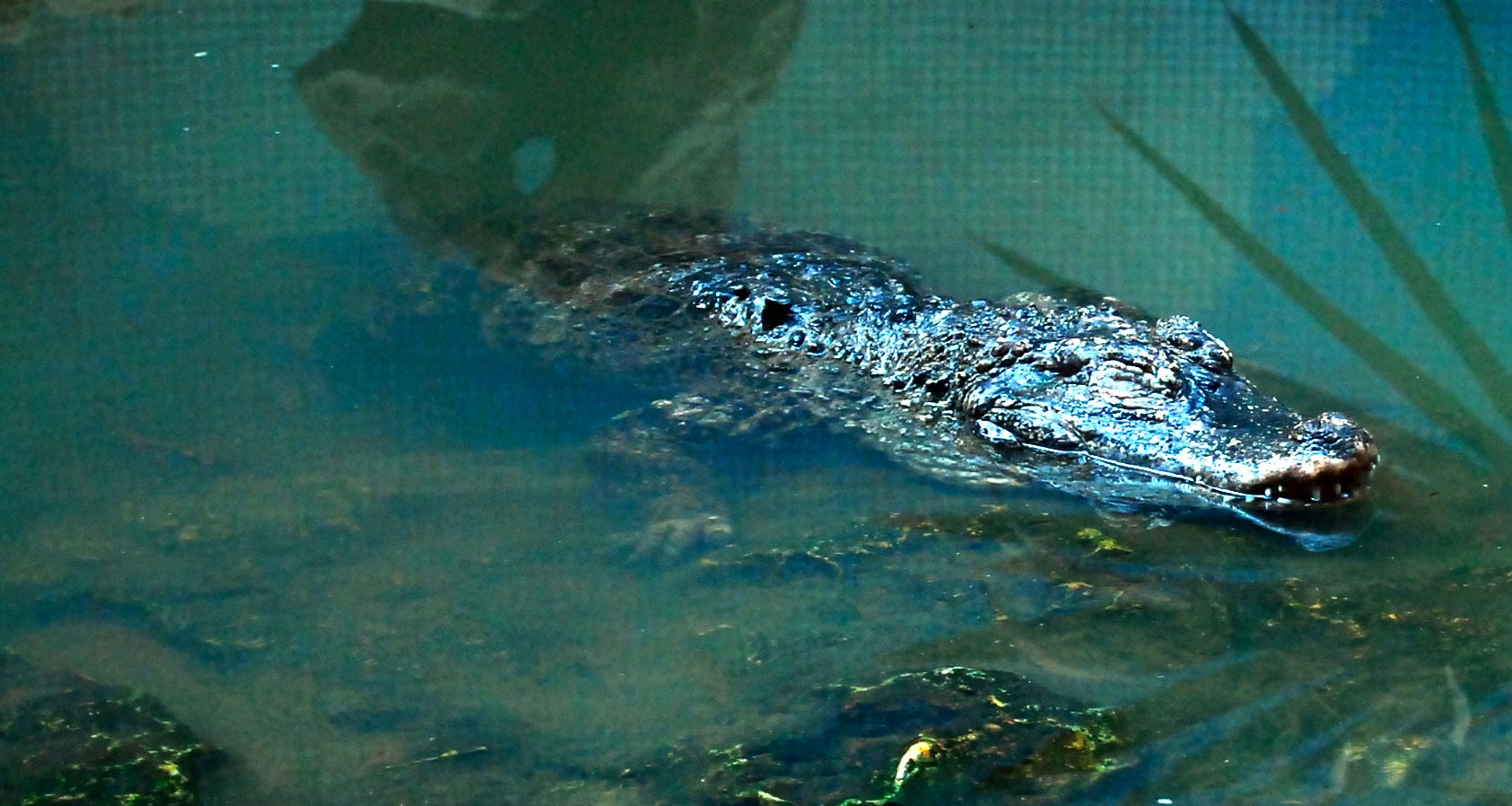
Chinese Alligator (Alligator sinensis)
Smaller than its American counterpart, the Chinese alligator was nonetheless the likely inspiration for Chinese dragon myths, which have been integral to the nation’s culture for millennia. Despite this prestige, the rugged, panoplied species nearly went extinct in the late 1990s.
The numerous dams in the Yangtze basin have been the principal cause of the alligator’s decline. Its natural homeland is the marshy wetland forest that once flooded when the river ran wild. Now that water flow is controlled by large hydroelectric dams like the Three Gorges Dam, the largest in the world, the floods have gone, and the marshes have been drained for rice paddies.
Virtually the entire wild population now lives in the Anhui National Nature Reserve for Chinese Alligator (ANNRCA), a protected area of marshy wetland set aside specifically for the alligator’s survival. There are nearly 2,000 individuals there now - a massive increase over the 150 counted in the early 2000s. Five times that number are thought to be held in captivity.
One day, perhaps decades or centuries from now, hydropower may no longer be necessary to generate electricity and Chinese alligators will roam a wild Yangtze once again. For now, the Chinese alligator has survived extinction and lives to return another day.
IUCN: Critically Endangered (CR)
Latest daily figures
Latest quarterly global percentage (BEV +PHEV)