


The Trump administration’s attempt to fatally wound the wind and solar industries has failed, reports Canary Media. One full year after the repeal of Biden’s pro-climate Inflation Reduction Act (IRA), renewables are still booming.
More than 90% of the power plants brought online in America in 2025 were solar, wind, or battery farms, according to the U.S. Energy Information Administration. And the agency projects that these clean resources will account for 93% of new additions to the power grid this year.
2. Canada Pivots Hard Towards Fossil Fuels
Canada will scrap climate targets and fully embrace its role as a fossil fuel producer, explains CBC News. In a televised speech announcing the change, Prime Minister Carney was highly critical of the previous government’s pro-climate energy strategy.
The Carney government is also expanding exports of liquefied natural gas (LNG) and supporting another pipeline from Alberta to the West Coast."We can't afford to restrain the growth of an important part of our energy mix, oil and gas…”
Unlike Norway, Canada isn’t doing anything to make up for its high oil & gas sector emissions. If cutting oil & gas emissions is too politically divisive—it should cut elsewhere. –DB
3. Data Centers Would Explode PA Emissions
A new study has found that the proposed 14 GW of fossil gas-fired data centers would massively increase Pennsylvania’s carbon emissions, notes Inside Climate News. Nationally, at least 74 new gas-fired power plants are being planned to power data centers.
…the plants would together emit some 68 million tons of carbon dioxide equivalent annually, part of a national trend that would result in a huge rise in greenhouse gas emissions amid global efforts to slow climate change. That bump would mean a 24 percent increase in Pennsylvania’s emissions [over 2022 levels].
Our Blue Marble

Remote Peninsula | Baffin Island, Canada 🇨🇦
70° 48′ 0″ N, 70° 43′ 0″ W
Earthview is a reader-supported publication devoted to climate change and the environment. Please consider a paid subscription to support the work we do and access premium content.
Good Climate News
1. Chile Reaches 20 GW of Renewables
Chile has hit 20 GW of total renewable generation capacity, heralds PV Magazine. This is made up of about 12 GW of solar, 6 GW of wind, and the remainder is a smattering of hydro and geothermal.
The CNE lists 185 renewable energy projects under construction, totaling 4,176 MW. Solar PV accounts for 3,768 MW, or roughly 90% of the pipeline. Wind projects represent 370 MW.
2. NY Hits 8 GW of Distributed Solar
New York has hit 8 GW of distributed solar capacity, relays PV Tech. The state is now ahead of schedule to reach its target of 10 GW by 2030.
Currently, there are more than 276,000 distributed solar projects operational across the state, with a further 2.7GW in development.
3. Home Batteries Booming Worldwide
Three giant Virtual Power Plants (VPPs) have joined forces to power data centers, details Yale Environment 360. Batteries are directly displacing fossil capacity, obviating the need for new fossil generation by making the grid more flexible, and enabling higher wind and solar penetration rates—each a boon to decarbonization.
Large battery projects, says a May report from the energy think tank Ember, “are increasingly cost-competitive and faster to build than new gas power plants.” And their carbon footprint is about 87 percent smaller than an average-size gas peaker.
In addition to making the grid cleaner and more flexible, home batteries give consumers backup power and resiliency. A win-win for everyone. –DB
Book of the Week

Concrete Botany: The Ecology of Plants in the Age of Human Disturbance | Joey Santore
Amateur botanist and host of the popular YouTube channel Crime Pays but Botany Doesn’t Joey Santore gives the reader an in-your-face view of how the Anthropocene has ravaged natural ecosystems. Grasslands paved over with concrete. Invasive plants instantly dysregulating delicate ecological balances that took millions of years to evolve. Alas, human beings have indeed been the problem.
But we can also be the solution. We can foster native plants in our own backyards that help to restore the natural world to something closer to a healthy state. A rare environmental book with a path to concrete action. –DB
Buy Now: Bookshop.org 🇺🇸 | Bookshop.org 🇬🇧
In Brief
🇧🇩 Bangladesh: An important source of protein is withering away, as pollution has degraded fish catch yields in Kaptai Lake.
🇫🇷 France: Lawmakers have proposed a law to protect workers from heatwaves modelled on Spain’s model—which allows for mandatory timeshifting to cooler hours of the day and generous paid leave.
🇳🇱 Netherlands: The recent heatwave killed at least 480 people nationwide.
🇺🇸 United States: Ecologists are using rare fungi to help restore the rainforests of Palmyra Atoll—a remote island in the Pacific controlled by the US.
Planetary Pulse
Planetary Health — Latest figures
CO2: 430.78 PPM (+.34% YoY)1 | Temperature Anomaly: +1.42 C
Forest Cover: 31.8% | Protected Areas: 12.3% (17.3% terrestrial, 10.01% marine)
Emissions per Capita: 4.89 (World) | 9.1 (China) | 13.1 (USA) | 6.1 (EU) | 2.1 (India)
Low Carbon Electricity: 43.1% | Low Carbon Energy: 19.8% | EV New Sales : 24.1%2
The Other 74%
The global ocean temperature reached a record high in June at 20.98°C.
Seabirds off the coast of California are starving due to a prolonged marine heatwave.
Australia’s seagrass meadows are under pressure due to climate change and chemical pollution.
Meet the Endangered
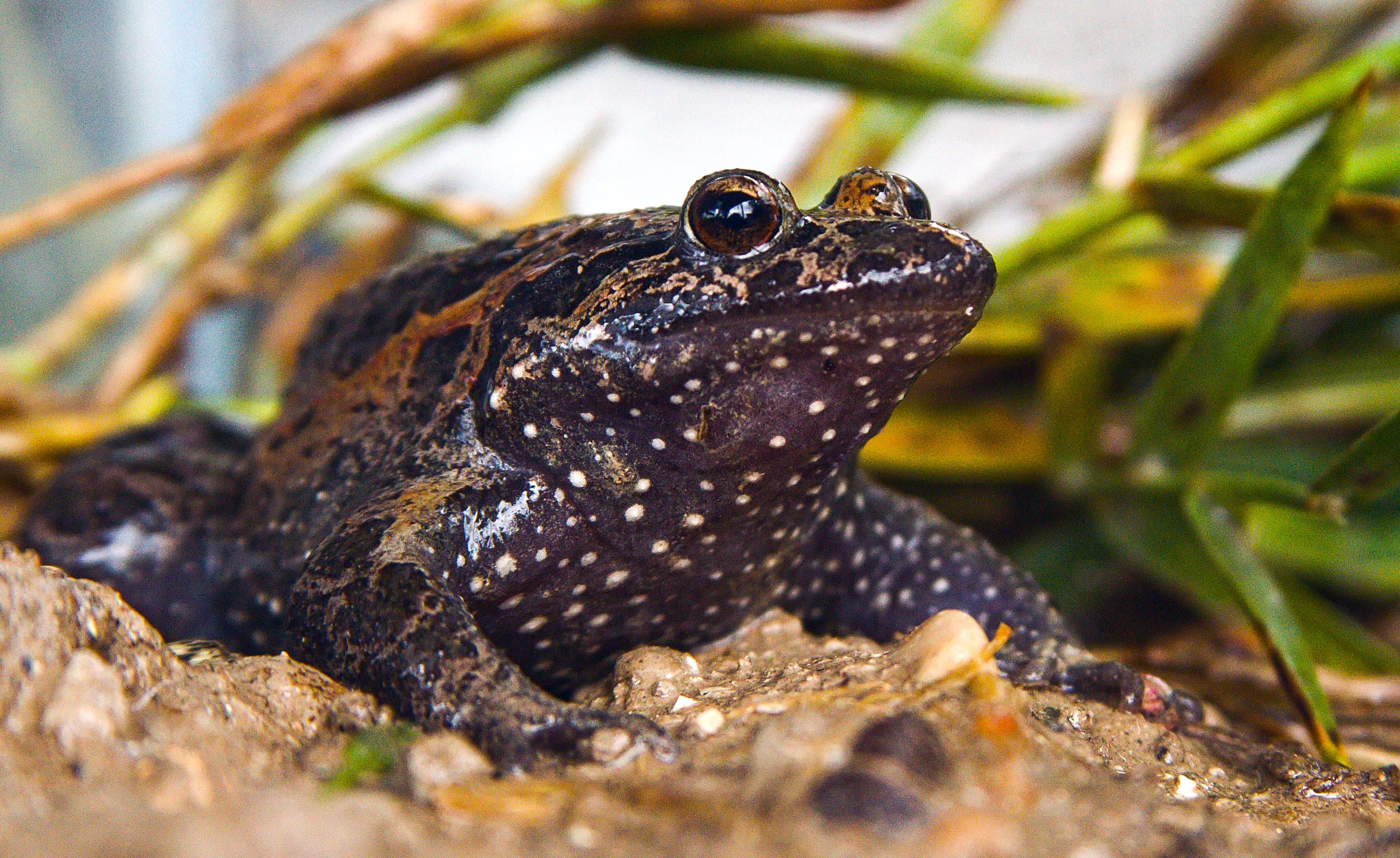
Hula Painted Frog (Latonia nigriventer)
In the 1940s, scientists discovered the Hula Painted Frog along the shores of Lake Hula, in what was then Mandatory Palestine, now Israel. Subsequent research revealed that the frog belonged to a long-extinct genus known in Europe from fossils.
Shortly thereafter, the marshland surrounding Lake Hula was drained to make way for agricultural development. The Hula Painted Frog disappeared and was presumed extinct. Nocturnal, solitary, and fearful of humans, the sably piceous amphibian evaded detection until a park ranger discovered a single individual in 2011. This unique history gives the frog the rare status of both a living fossil and a Lazarus taxon.
The Hula Painted Frog is vulnerable due to its extremely limited native range and the desiccation of its remaining wetland habitat. It is also a favorite target for predators like herons and egrets, which are unusually common near Lake Hula.
IUCN: Critically Endangered (CR)
Earthview is a reader-supported publication devoted to climate change and the environment. Please consider a paid subscription to support the work we do and access premium content.
Latest daily figures
Latest quarterly global percentage (BEV +PHEV)