


France has created three new Marine Protected Areas (MPAs), reports Radio France Internationale. The MPAs — located in the Indian Ocean, Caribbean, and Mediterranean — will carry strict restrictions against human activity like fishing and tourism.
In Guadeloupe, the zone will protect coral reefs, home to sea turtles, while in the Bay of Audierne, off the coast of Finistère, the measures will protect a bird species known as the Kentish plover.
2. Trees Store Less Carbon Than Thought
Trees may store less carbon in future than previously presumed, notes The Guardian. A new study has found that increased photosynthesis does not always lead to increased wood growth.
…wood growth was restricted to periods of low aridity and temperature, which are becoming rarer as the global rise in temperature makes heatwaves and droughts more common.
Yet another reason why ‘just plant more trees’ won’t work. We need to stop burning fossil fuels. – DB
3. Historic El Nino Threatens Droughts, Floods, and Fires
El Nino has begun and scientists are worried it could be the hottest ever, explains The Associated Press. The natural warming cycle is set to compound warming from climate change to create dangerous heat over the next 9 to 12 months.
Parts of western South America — where the first El Ninos were noticed decades ago — often get heavy rain and floods, along with an extra[-]warm summer. India faces more intense heat waves, while drought, wildfires and heat threaten Australia.
Our Blue Marble

Midui Glacier | Bomê County, Tibet, China
29° 28′ 18.56″ N, 96° 29′ 53.87″ E
Good Climate News
1. Solar Generates More Electricity Than Coal in US
The United States generated more electricity from solar than coal in May, notes Canary Media. It’s the first time that threshold has been crossed on a monthly basis.
In the late 2000s, facing hotter competition from increasingly abundant natural gas and a burgeoning renewable energy sector, coal-fired electricity output peaked in the U.S. It’s been all downhill from there.
2. Giant Solar Cell Factory Opens in Georgia
Q-cells has started producing solar cells at its massive manufacturing facility in the US state of Georgia, relays Latitude Media. Panels have historically been assembled in the United States, but only in recent years have other elements of the supply chain been re-shored.
The factory will be the only one in the U.S. to make every major solar panel component — ingot[s], cells, and wafers — under one roof. Production is still ramping up, but by the end of this year it is slated to have 3.3 gigawatts of capacity.
3. EVs Reach Two-Thirds of Vehicle Sales in China
Two-thirds of new vehicle sales in mainland China are now EVs, heralds The South China Morning Post. Fully battery electric (BEV) and plug-in hybrid (PHEV) sales combined for 66.7% of the market in the first week of June.
“The Middle East conflict has given Chinese EV makers an unexpected shot in the arm,” said Eric Han, a senior manager at Shanghai consultancy Suolei. “Petrol cars may have run out of steam.”
China is fast becoming the next Norway, where 99% of new vehicles are EVs. This will have profound consequences for the oil market and climate change. – DB
In Brief
🇦🇱 Albania: Protests have erupted to protect pristine wildland from a Trump-backed hotel development.
🇲🇿 Mozambique: The first white rhino breeding population in decades has been established in the country, with the arrival of nine females from South Africa.
🇳🇿 New Zealand: Populations of the endangered Kōkako have exploded amidst a baby boom in the Hūnua Ranges.
🇹🇭 Thailand: Citizens in Northern Thailand are protesting against dangerous levels of heavy metal pollution in local rivers.
Planetary Pulse
Planetary Health — Latest figures
CO2: 431.71 PPM (+0.30% YoY)1 | Temperature Anomaly: +1.42°C2
Forest Cover: 31.8% | Protected Areas: 12.3% (17.3% terrestrial, 10.01% marine)
Emissions per Capita: 4.89 (World) | 9.1 (China) | 13.1 (USA) | 6.1 (EU) | 2.1 (India)
Low Carbon Electricity: 43.1% | Low Carbon Energy: 19.8% | EV New Sales : 24.1%3
The Other 74%
The elusive Goblin Shark (Mitsukurina owstoni) has been caught on video in its native habitat for the first time.
The NGO Ocean Cleanup is using special boats to intercept trash in rivers before it reaches the ocean.
A 5.3-million-year-old whale graveyard has been found off the coast of
Australia.
Meet the Endangered
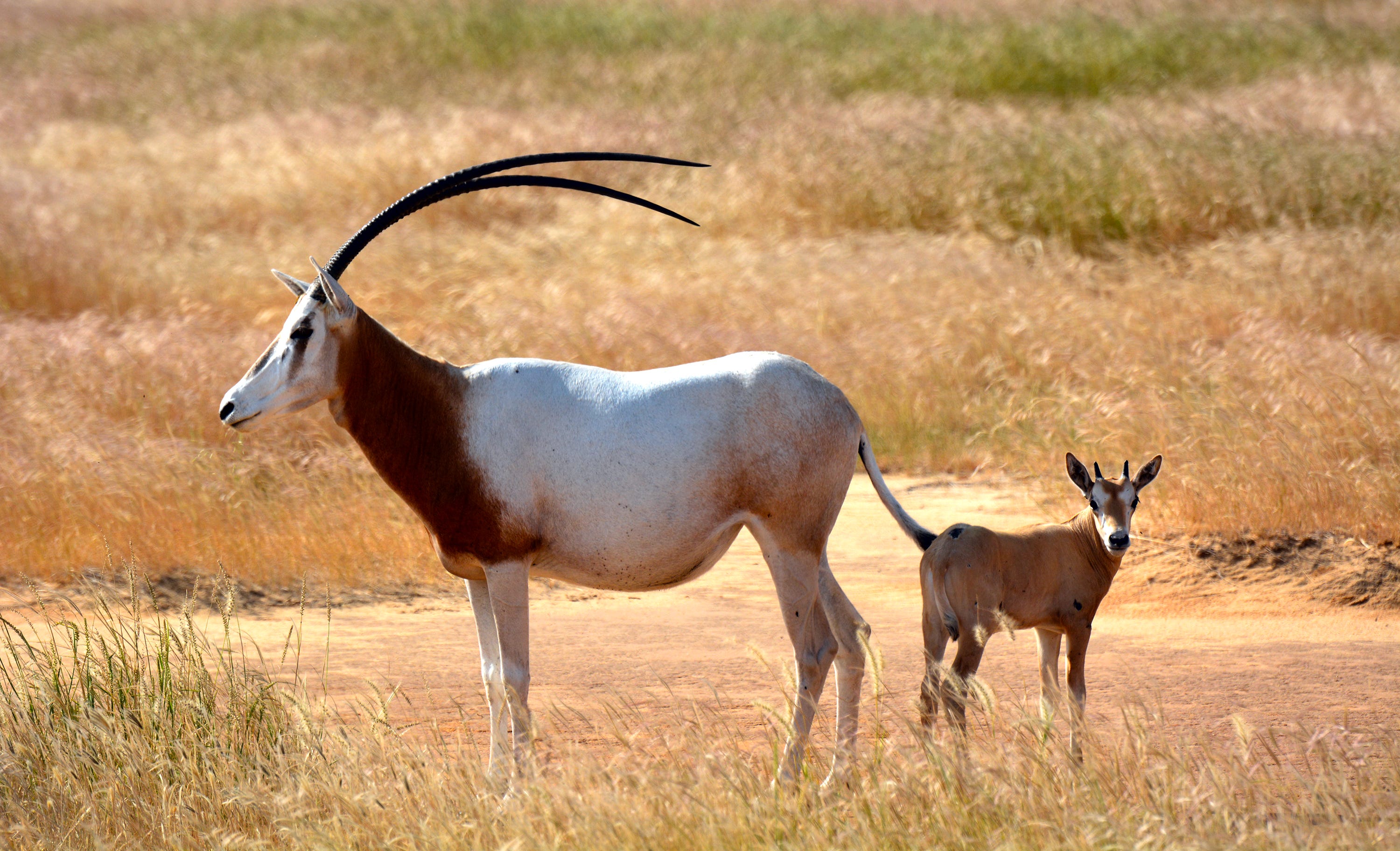
Scimitar Oryx (Oryx dammah)
There is perhaps no greater success in conservation history than the Scimitar Oryx. In 2000, this princely bovid was declared extinct in the wild, following centuries of decline in its North African homeland. But successful breeding programs allowed the animal to be reintroduced in 2016. The wild population is now estimated at 800.
The Scimitar Oryx was a treasured species in antiquity. Egyptians used the oryx in their funeral rites and named a province for it. Wealthy Roman households kept it for its meat and leather. Some believe the oryx is also the origin of the unicorn myth, as from certain angles it can appear to have one horn instead of two.
In a strange twist of fate, this ancient Old World species is now found predominantly in Texas. It was there that private trophy hunting ranches created breeding programs, which - in addition to amassing hunting stock - also provide vital genetic diversity for reintroduction efforts. An estimated 10,000 remain in the Lone Star State, vastly exceeding the numbers in the wild.
IUCN: Endangered (EN)
Sign up to get Earthview in your inbox:
And consider a paid subscription to get premium analysis and support the work we do!
Latest daily figures
Latest monthly figure from C3S/ECMWF
Latest quarterly global percentage (BEV +PHEV)