


France has published a detailed plan to phase out fossil fuels, heralds France 24. The nation plans to eliminate coal use by 2027, oil by 2045, and fossil gas by 2050 — the specific dates going beyond the vague “net-zero” promises of other countries.
French manufacturers are expected to produce 400,000 electric vehicles by 2027 and one million by 2030. The aim is to ensure that “reduced dependence on oil does not translate into new dependence on imported vehicles,” the document says.
2. Toxic Chemicals Found in Clothing
The clothing you wear could be contaminated by lead and other toxic substances, warns ABC News. Textile makers use such substances in the dyeing process, and recent research has found contaminants can transfer to humans.
“Knowing how textiles are processed, and knowing how little they’re tested, I think that there’s a very reasonable argument that we should be concerned,” she says. “Because ultimately, we don’t really know what’s in these products. They’re not being tested.”
3. 152 Million Americans Live With Unhealthy Air
Just under half of the United States’ population is breathing air with unhealthy levels of air pollution, relays CBS News. Children are likelier to live in polluted areas than the general population — and are more vulnerable to the negative health impacts.
Nearly 4 million more people across the U.S. were breathing unhealthy levels of smog between 2022 and 2024 than they were between 2021 and 2023…
The air quality benefits alone are enough to justify the transition away from fossil fuels –DB
Our Blue Marble

Hiva Oa | French Polynesia
9° 47′ 32.28″ S, 139° 0′ 46.08″ W 1
Good Climate News
1. Coal Uptick Limited Despite Iran War
The Iran War has disrupted supplies of oil and gas, but this will not lead to a large uptick in coal use — notes Carbon Brief. Rather, countries are switching to clean energy.
Notably, experts say that there is no evidence of the kind of structural “return to coal” that would spark concerns about countries’ climate goals. There have been no new coal plants announced in recent weeks.
2. $2 Billion Greener Steel Plant Planned in Arkansas
The US state of Arkansas will be the site of a new lower-emission steel plant, reports Canary Media. Nippon Steel says the Big River plant will use Direct Reduced Iron (DRI) technology and will be coal-free.
These facilities can emit about half the CO2 emissions of coal-based blast furnaces. A handful of efforts are underway globally to instead use green hydrogen, which is made with renewable energy, to produce nearly zero-emission iron.
3. Agrovoltaics Take Off in Tennessee
Integrating cattle grazing and solar energy production is a massive win-win for farmers and the climate, explains The Associated Press. The extra income helps farmers stay on their land, and its dual-purposing mitigates the land footprint of solar — the most abundant source of low-carbon energy.
…pasture beneath solar panels retains more moisture, making it more drought tolerant, said Anna Clare Monlezun, a rancher and rangeland ecosystem scientist who’s working on the Tennessee project. Grazing in the shade leaves animals less prone to heat stress, enabling them to gain more weight and drink less water.
Agrovoltaics will greatly expand the potential of solar energy — allowing it to become truly dominant globally –DB
Book of the Week

Life on a Little-Known Planet: Dispatches from a Changing World | Elizabeth Kolbert
Elizabeth Kolbert has spent two decades writing on the environment for the New Yorker. This book is a curation of seventeen of the author’s finest essays over this period - chronicling humanity’s reckoning with the climate crisis in real-time. –DB
Bookshop.org US | Bookshop.org UK
In Brief
🇨🇳 China: The planting of 78 billion trees has had some unexpected side-effects.
🇪🇨 Ecuador: Fracking is now underway in the Amazon rainforest.
🇬🇹 Guatemala: Conservationists are using AI-enabled bioacoustics to detect illegal logging.
🇮🇩 Indonesia: Deforestation rose sharply in Indonesia last year.
🇿🇦 South Africa: Overfishing is causing African penguins to starve.
Planetary Pulse
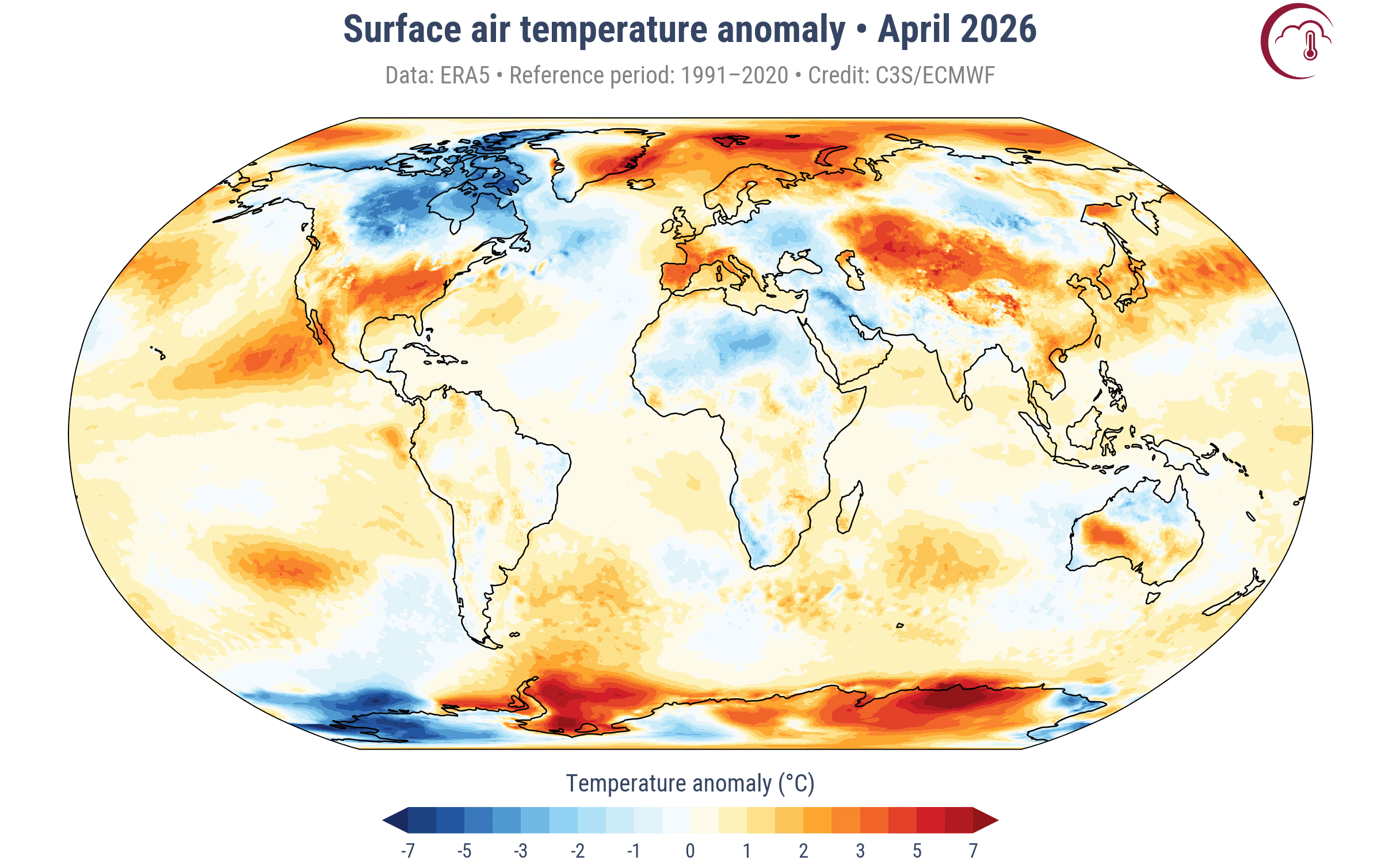
Planetary Health — Latest figures
CO2: 432.24 PPM (+1.79 YoY)2 | Temperature Anomaly: +1.48 C
Forest Cover: 31.8% | Protected Areas: 12.3% (17.3% terrestrial, 10.01% marine)
Emissions per Capita: 4.89 (World) | 9.1 (China) | 13.1 (USA) | 6.1 (EU) | 2.1 (India)
Low Carbon Electricity: 43.1% | Low Carbon Energy: 19.8% | EV New Sales : 24.1%3
The 77%
Robotic submarine exploration in the Southwest Atlantic Ocean is uncovering new details about the world’s largest animal migration.
Homeowners in North Carolina are moving their homes on wheels to escape storms and rising sea levels.
A native tribe in Washington state is buying up land and flooding it to restore wetlands.
The race is on to map Indonesia’s rare glaciers before they disappear.
Meet the Endangered

Pink Pigeon (Nesoenas mayeri)
In the 1990s, the Pink Pigeon was on the verge of extinction, with fewer than ten individuals left in the wild. Since then, this comely Mauritian bird has staged a remarkable comeback, evading the fate of its famously bygone cousin - the Dodo (Raphus cucullatus).
The Pink Pigeon is native to the old-growth forests of Mauritius, a remote volcanic island in the Indian Ocean. Only 2% of the island’s original forest cover remains, and this habitat destruction - melded with the bane of introduced predators - begot the pigeon’s decimation.
Aggressive intervention saved the species. Captive Pink Pigeons from global zoos were flown to Mauritius to interbreed with native birds, diversifying the gene pool. There are now around 500 individuals in the wild, and its classification has been upgraded to Vulnerable.
IUCN: Vulnerable (VU)
Get Earthview in your inbox:
And consider a paid subscription to get premium analysis and support the work we do!
Photo credit: Sémhur | CC BY-SA 4.0
Latest daily figures
Latest quarterly global percentage (BEV +PHEV)