



An effort to gut the Endangered Species Act on Earth Day has failed, heralds Inside Climate News. Republican leadership in the US House of Representatives pulled a bill last week that would have key provisions — following a rebellion from their own members, particularly the Florida delegation. The vote had been scheduled for Earth Day.
“Don’t tread on my turtles. Protected means protected,” U.S. Rep. Anna Paulina Luna (R-Fla.) wrote in a social media post on Monday ahead of the then-pending vote.
Congress is expected to change hands next year. Until then, environmentalists must be on guard for new legislative attacks. –DB
Welcome to Earthview’s new newsletter format! We’ve combined several popular features like Good Climate News and Meet the Endangered into a single weekly mailing — and added a new digest of the most important environmental news stories.
We hope that putting more information into fewer emails will be more useful to you! –DB
2. Catastrophic AMOC Shutdown More Likely
A new study has raised the likelihood that the ocean current system that maintains Europe’s temperate climate will slow down due to climate change, reports CBC News. Atlantic Meridional Overturning Circulation (AMOC) brings warm Caribbean water to the Vieux Continent — and a disruption could drastically destabilize its climate.
“The contrast between the weather that we get will get much larger, which is kind of bad for agriculture. You might get a very warm spring and all the blossoms are out and suddenly you get a cold air outbreak from Scandinavia and they freeze…”
These findings underscore the need for more aggressive climate action to insure against the risk of the worst possible outcomes. –DB
3. Climate Change Turning Arctic Rivers Acidic
Thawing permafrost and increased precipitation are turning Arctic rivers into liquid rust, relays Yale Environment 360. The seepage of heavy metals in particular poses concerns about wildlife impacts.
Since at least 2019, the rusting and other similar river discolorations have spread to more than 200 rivers in Alaska, a growing number of rivers in the Yukon and Northwest Territories, and as far north as the Arctic Archipelago.
Photos of the discoloration phenomenon offer a striking visual depiction of climate impacts. –DB

Our Blue Marble
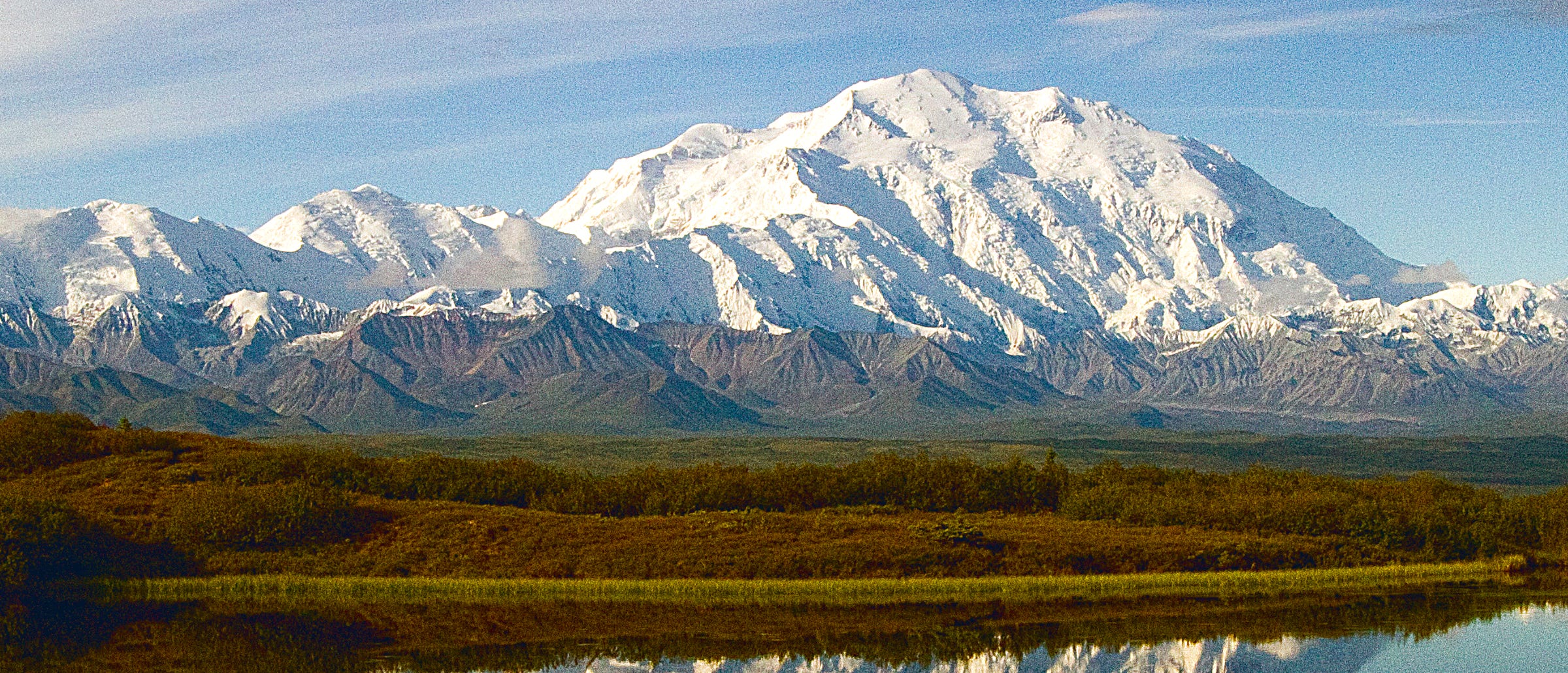
Denali | Alaska, USA
Good Climate News
1. Fossil Phase-Out Conference Underway in Colombia
The world’s first intergovernmental conference aimed at eliminating fossil fuels has commenced in Santa Marta, Colombia — notes The Associated Press. A group of 50 nations — frustrated by a lack of climate progress — is driving the talks, which aim to generate proposals for halting fossil fuel extraction directly (rather than indirectly through vague carbon emissions targets).
“As people everywhere suffer the consequences of oil-driven conflict, it’s never been clearer that the world needs to leave the fossil fuel era behind,” she said. “Santa Marta is a chance for governments and communities to grab the bull by the horns and take action toward a greener, more equitable and peaceful world.”
At some point the world is going to have to stop burning fossil fuels. The sooner we abandon “all-of-the-above” energy policies and start the phase-down, the better. –DB
2. Solar Keeps Fossil Generation Flat in 2025
The growth of solar energy kept fossil fuel consumption in the power sector flat in 2025, explains Ember. Globally, fossil fuel generation fell by 0.2% — driven by unprecedented declines in China and India.
“We have firmly entered the era of clean growth,” said Aditya Lolla, Ember’s managing director. “Clean energy is now scaling fast enough to absorb rising global electricity demand, keeping fossil generation flat before its inevitable decline.”
We know where this is heading. The explosive growth of solar will soon lead to absolute declines in fossil fuel consumption — a watershed moment in the history of the climate movement. –DB
3. Indigenous Australians Embrace Solar Microgrids
Remote Indigenous Australian communities are regaining their energy sovereignty by switching from fuel-dependent diesel generators to solar microgrids, says The Guardian. The systems enhance electricity reliability and generate revenue by selling into the grid — slashing monthly bills.
“We’re investing in an idea,” he says. “Ownership of everything. The time has passed where communities rely on a broken system, and we out at Djarindjin don’t believe the system works for us.”
Solar microgrids with battery storage will almost certainly replace dirty diesel generators worldwide over the next decade. –DB
Book of the Week

The Ecology Book | DK, Tony Juniper
A basic primer on fundamental environmental science principles. Highly visual and easy to understand. Useful for beginners to ecology or anyone looking for a simple, clear overview of the topic. A great gift for adult friends and older, curious children. –DB
Bookshop.org US | Bookshop.org UK
In Brief
🇧🇴 Bolivia: Cacao farmers are fighting back against gold mine pollution.
🇮🇳 India: Heatwaves are disrupting India’s election campaign rallies.
🇯🇵 Japan: A 1,200-year-old database of cherry blossom bloom dates has a new steward.
🇳🇿 New Zealand: Insurance premiums are surging as climate change makes storms more frequent and intense.
🇿🇦 South Africa: A delay in coal phase-out plans would cause an extra 32,000 deaths.
Planetary Pulse
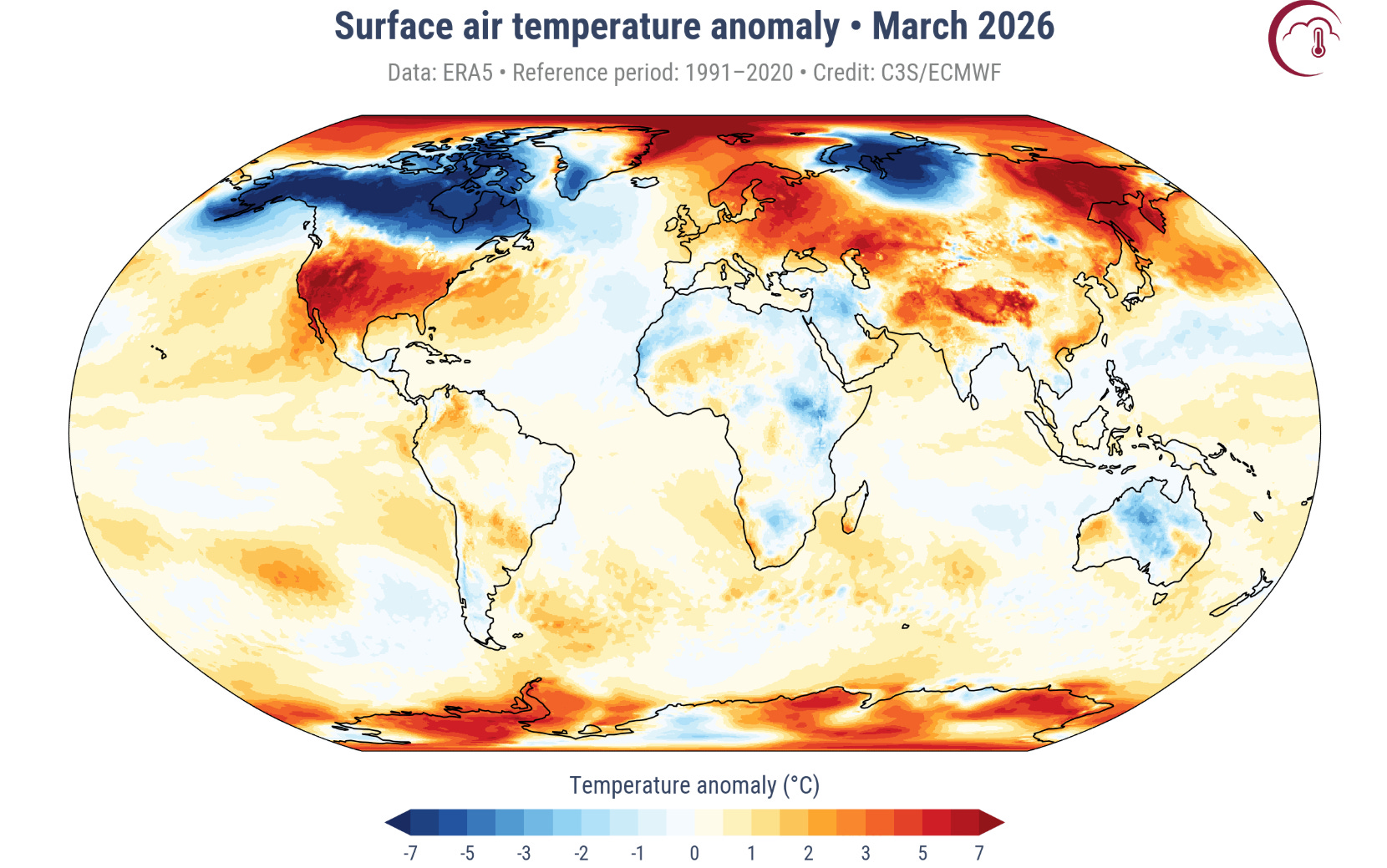
Planetary Health — Latest figures
CO2: 432.24 PPM (+1.79 YoY)2 | Temperature Anomaly: +1.48 C
Forest Cover: 31.8% | Protected Areas: 12.3% (17.3% terrestrial, 10.01% marine)
Emissions per Capita: 4.89 (World) | 9.1 (China) | 13.1 (USA) | 6.1 (EU) | 2.1 (India)
Low Carbon Electricity: 43.1% | Low Carbon Energy: 19.8% | EV New Sales : 24.1%3
Latest Research
PLOS Climate: Environmental claims, climate promises, and ‘greenwashing’ by meat and dairy companies
Environmental Science & Technology: Uncovering the Global Burden and Future Trajectories of Nanomagnetite Particle Emissions from Biomass Power Plants
Science: Amazon forest loss: An all-sky biophysical top-of-atmosphere cooling feedback
Nature Medicine: Epigenetic fingerprints link early-onset colon and rectal cancer to pesticide exposure
Meet the Endangered
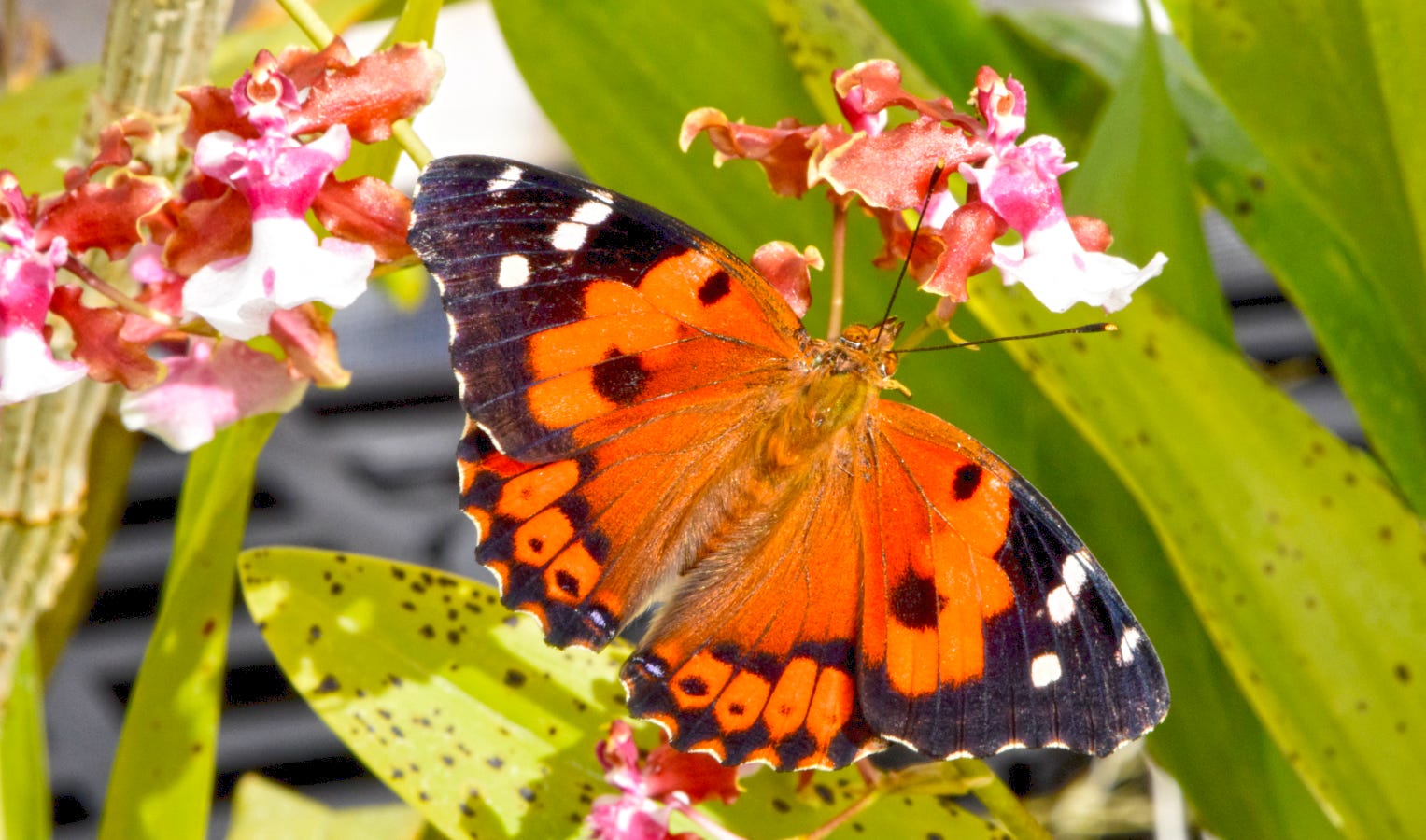
Kamehameha Butterfly (Vanessa tameamea)
Around 8 million years ago, a single pregnant female Red Admiral butterfly living on the American West Coast was swept up by a gale, taken 3,000 miles across the Pacific Ocean, and deposited alive onto the Hawaiian island of Kauai. From this single Eve sprang an entirely new species - the Kamehameha Butterfly.
Unlike its cousins, the Kamehameha displays sexual dimorphism; males display three yellow spots, while females boast white. Its caterpillars feed on local species of nettle, particularly the māmaki (Pipturus albidus) - which are abundant in the high-elevation damp forests of Hawaii. Adults gorge on the sap of the koa tree (Acacia koa).
Endemic to all the Hawaiian islands, the Kamehameha is gradually disappearing from its native range. The largest threats are habitat destruction in coastal areas and predation from invasive species, particularly ants and wasps.
IUCN: Vulnerable (VU)
Get Earthview in your inbox:
And consider a paid subscription to get premium analysis and support the work we do!
Photo credit: Public Domain
Latest daily figures
Latest quarterly global percentage (BEV +PHEV)