


Democrats swept the United States midterm elections on Tuesday, reports NPR. The left-wing, pro-environment party will control both chambers of Congress for the next two years, holding large majorities in the House of Representatives and at least 54 seats in the Senate.
Senate races in Alaska and Mississippi are still too close to call as of Wednesday morning.
The Senate win marked a long-fought victory for Democrats, and an electoral disaster for Republicans, who began the year with little expectation that their 53–47 majority was at risk.
The election results should significantly shift US policy in a pro-climate direction for the last two years of the Trump administration. –DB
2. LA Fires Poisoned Millions of People
The 2025 LA fires exposed millions to poisonous heavy metals like lead and arsenic, explains ABC News.
Contrasted with the wildfire smoke, the plume from the LA fire contained 50 times more lead, three times more arsenic, and seven times more halogens. At the peak of burning, about 7 million people were exposed for 24 hours to lead levels more than 80 times what's typical.
3. Biodiversity Conference Concludes in Armenia
Countries have agreed to accelerate action on the biodiversity crisis, details Reuters.
The talks…oversaw the first global review of the Global Biodiversity Framework agreed in Montreal four years ago…The framework agreed in Montreal set goals including conserving 30% of land, inland waters, marine, and coastal areas by 2030, restoring 30% of degraded ecosystems, reforming harmful subsidies, and mobilising $200 billion a year to help pay to preserve biodiversity.
Our Blue Marble
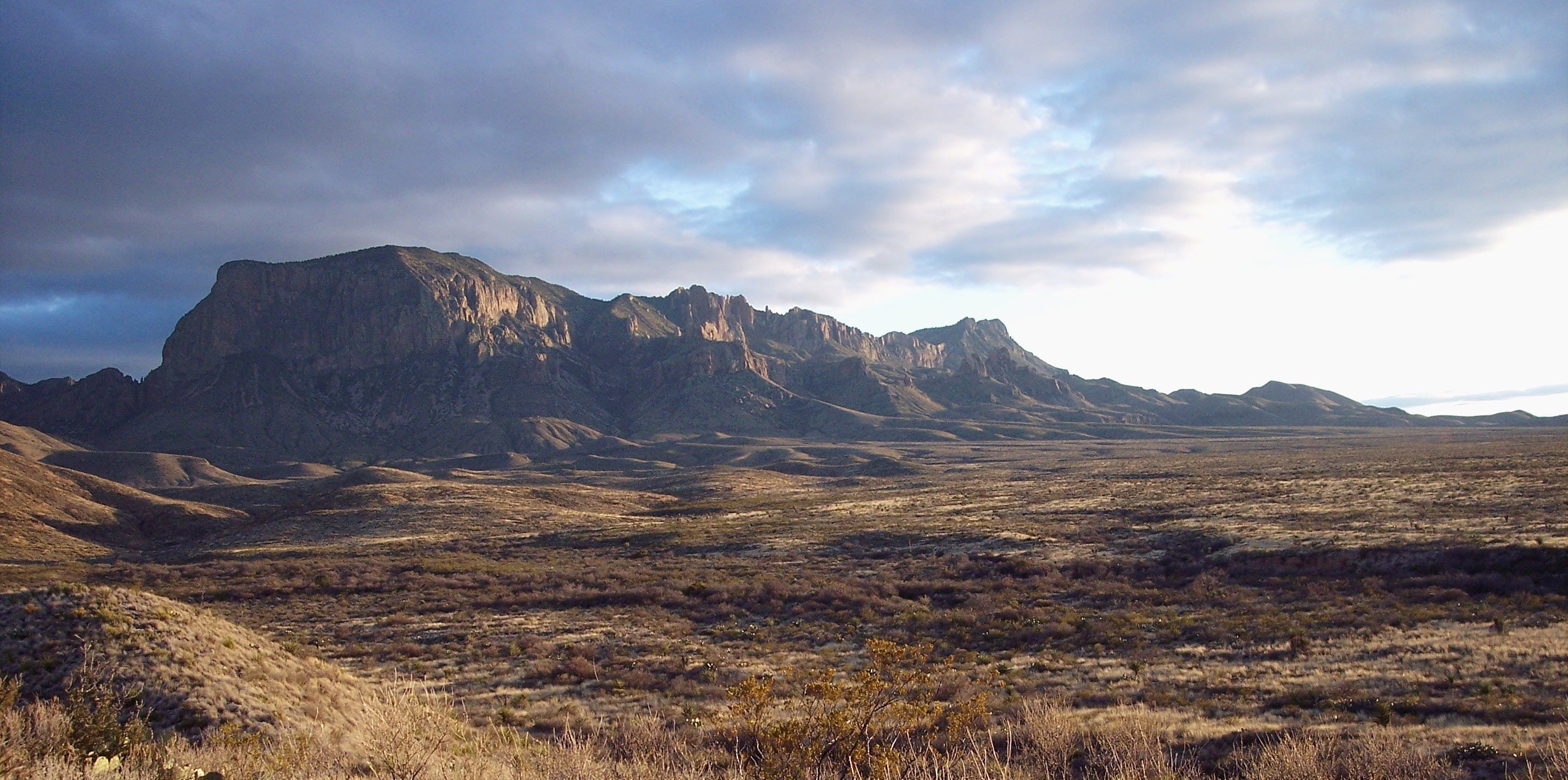
Big Bend National Park | Texas, United States 🇺🇸
29° 21′ 4.46″ N, 103° 16′ 38.35″ W
Earthview is a reader-supported publication devoted to climate change and the environment. Please consider a paid subscription to support the work we do and access premium content.
Good Climate News
1. Meta Inks Deal for Low-Carbon Cement
Tech giant Meta has signed a deal with startup Fortera to help build a low-carbon cement plant, relays Canary Media.
Fortera is among a group of U.S. startups — including Brimstone, CarbonBuilt, and Sublime Systems — that are looking to enter a massive industry responsible for roughly 8% of the world’s planet-warming emissions.
2. China Powering AI With Renewables
While the US toys with powering AI data centers with fossil gas, China is committed to using renewables, heralds Inside Climate News.
Chan said China’s ability to build solar projects quickly, combined with its large battery manufacturing capacity for energy storage, makes it easier to secure power for data centers. He sees this as a key reason China is building data centers faster.
The new US Congress should pass legislation to help the country catch up with China on renewables. –DB
3. New Rivian EV a Major Hit
Rivian is reporting its recently launched R2 electric vehicle is already the best-selling model in its history, notes Inside EVs.
The midsize electric SUV already outsold the R1T, R1S, and its electric delivery van between July and September.
As a result, the company is now revising the baseline for its annual delivery target from 65,000-70,000 units to 67,000-70,000 units.
In Brief
🇧🇴 Bolivia: The South American nation has documented the Amazon River Dolphin inside its borders for the first time.
🇮🇩 Indonesia: Dozens of endangered orangutans have been saved from out-of-control wildfires.
🇱🇦 Laos: Ecotourism helps deter hunters but also scares away wildlife, according to a new study.
🇺🇸 United States: Diverse forests can better withstand extreme weather conditions, a new study has found.
Planetary Pulse
Planetary Health — Latest figures
CO2: 430.78 PPM (+.34% YoY)1 | Temperature Anomaly: +1.42 C
Forest Cover: 31.8% | Protected Areas: 12.3% (17.3% terrestrial, 10.01% marine)
Emissions per Capita: 4.89 (World) | 9.1 (China) | 13.1 (USA) | 6.1 (EU) | 2.1 (India)
Low Carbon Electricity: 43.1% | Low Carbon Energy: 19.8% | EV New Sales: 30.6%2
The Other 74% 🌊
Greenpeace has begun placing giant boulders on the seabed to prevent bottom-trawlers from fishing off England’s east coast.
Nearly all of the world’s coral reefs are officially classified as critically endangered.
Endangered turtles and fragile coral ecosystems are imperiled by a gas field development in Australia.
Meet the Endangered
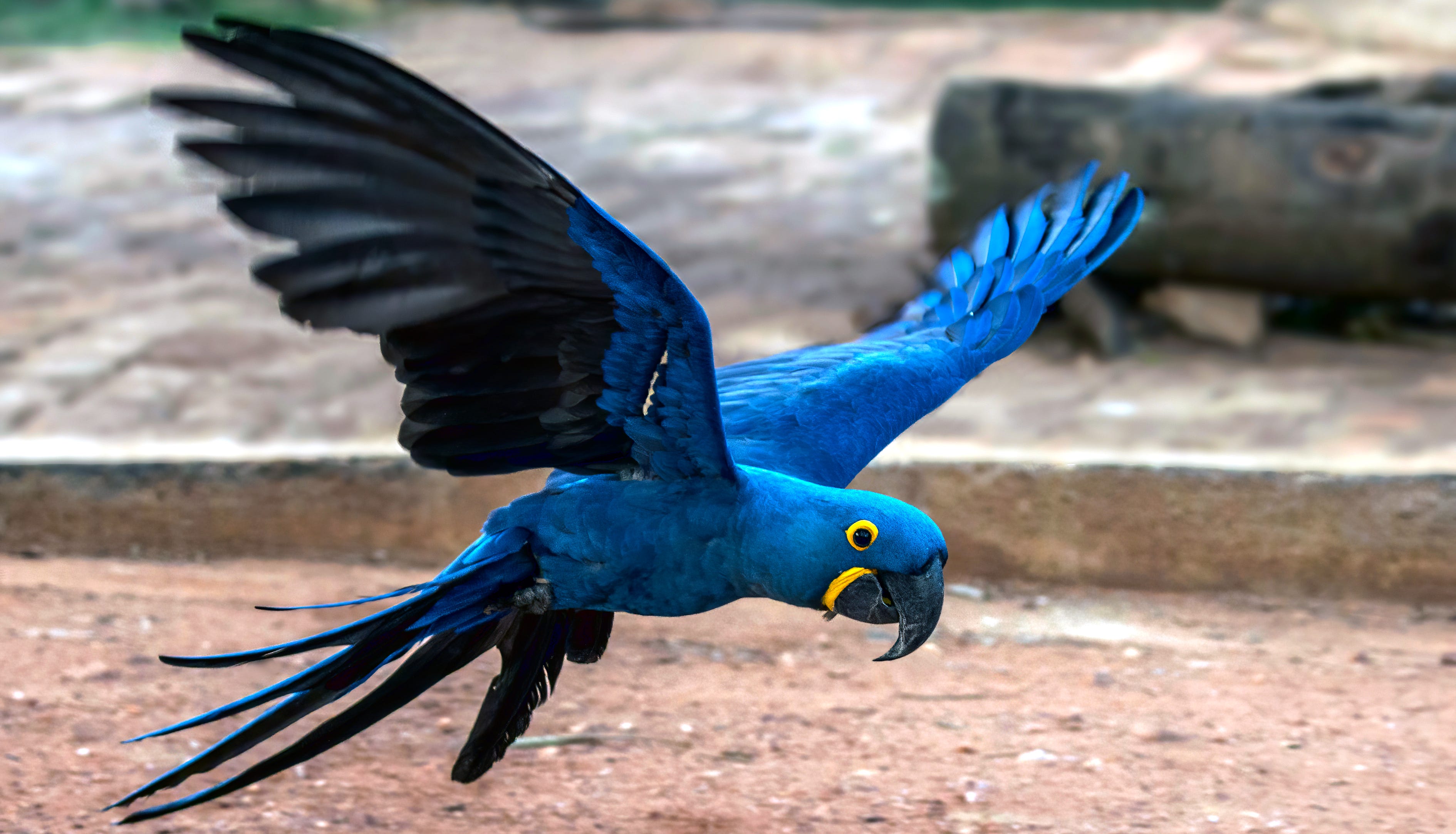
Hyacinth Macaw (Anodorhynchus hyacinthinus)
Native to Brazil, Paraguay, and Bolivia, the striking hyacinth macaw is the longest parrot in the world at 1 m (39 in). The ardently azure bird is capable of speech, but, compared to other psittacines, is not exceptionally gifted in this domain.
The hyacinth macaw is a docile bird that prefers semi-open manduvi forests. Its incredibly strong beak evolved to break palm nuts, and at 1,200 psi the hyacinth’s bite is more powerful than that of a grizzly bear. A bit of a foodie, it is also known to travel long distances to find the ripest, freshest fruit.
Like many species in South America, the hyacinth macaw is menaced by habitat destruction from encroaching cattle ranches. It additionally faces the threat of capture for the illegal pet trade, where it can fetch up to US$10,000 a head. Highly sought after - the parrot is not an easy bird to keep, as it blithely chews through steel enclosures.
IUCN: Vulnerable (VU)
Earthview is a reader-supported publication devoted to climate change and the environment. Please consider a paid subscription to support the work we do and access premium content.
Latest daily figures
Latest quarterly global percentage (BEV +PHEV)