


A global United Nations (UN) conference on soil restoration and conservation has convened in Mongolia, reports Inside Climate News. The so-called “land COP” hopes to develop strategies for saving rangelands in particular, which make up nearly half of the Earth’s land but are under threat from overgrazing.
This year’s gathering comes as drought has gripped much of the planet—nearly one-third of the world’s terrestrial lands last year, according to one study. Record-breaking heat is projected to worsen drought conditions across much of the world, including in Europe, where farmers across the continent are already suffering significant harvest losses.
The effects of the beef and dairy industry go far beyond its direct impact on climate change. The land-use concerns are massive. –DB
2. El Niño Shrinks Panama Canal Capacity
Panama will cut the number of ships allowed to traverse the Panama Canal starting next month, explains The Guardian. Water levels on the two artificial lakes that form part of the waterway are dangerously low due to a severe drought worsened by climate change and the cyclical El Niño phenomenon.
The Panama Canal handles 5% of global maritime trade and about 40% of US container traffic. The canal is favoured by many shippers because it usually reduces cost and transit times, especially for large retailers and energy companies that trade between China and the rest of Asia, and the US.
3. Peru Turns Military on Illegal Gold Mining
Peru is mounting aggressive military operations to disrupt and destroy illegal gold mines in the Amazon, details The Associated Press. The primary focus is on destroying the expensive equipment needed to run the mines.
…mining is destroying forests and contaminating rivers with mercury that accumulates in fish, spreading the impact to communities far from the mining sites. Ronald Flores Yáñez, a deputy prosecutor for Peru’s Office of the Attorney General, said illegal mining has advanced close to military monitoring points and into protected areas.
Book of the Week

The Savage Landscape: How We Made the Wilderness | Cal Flyn
Scottish writer Cal Flyn explores the remotest places on Earth—from Iceland, to the Amazon, and to Antarctica—and discovers there is no such thing as a truly “pristine” wilderness. Nearly every location on Earth is inhabited by humans to some extent, and we are introduced to the oddballs and misfits who make the planet’s loneliest patches their home. –DB
Buy Now: Bookshop.org 🇺🇸 | Bookshop.org 🇬🇧
Good Climate News
1. Next-Gen Geothermal Plant Comes Online
A second venture-backed geothermal startup is now generating electricity with enhanced geothermal (EGS) technology, relays Canary Media. Sage Geosystems’ 3 MW pilot project near San Antonio, Texas, serves as a proof of concept as the company seeks to take on industry leader Fervo Energy.
Sage’s enhanced geothermal system is a type of nascent tech that involves drilling deep into hot rocks and fracturing them to create water pockets, then using the heat to generate power. It’s distinct from the decades-old traditional geothermal plants.
2. Land Use Emissions Are Falling
While greenhouse gas emissions from energy have risen this century, the other major emissions category—land use emissions—has fallen, heralds Carbon Brief. Reforestation and afforestation efforts are the primary causes of this trend.
The 2025 report estimates that land-use emissions over 2015-24 averaged at 5Gt CO2 a year. This is around 23% lower than the average over 1995-2004 and 19% lower than [the average over] 2005-14, it says.
In contrast, global emissions from fossil fuels and cement have increased every decade since 1959, rising from an average of 11Gt CO2 in the 1960s to 35.9Gt CO2 over 2015-24, it says.
3. Clean Capacity Overtakes Fossil in India
India now has more clean, low-carbon electricity generation capacity than fossil generation capacity, notes The Economic Times. The milestone has been driven primarily by the booming solar industry.
In 2010, India had just 0.07 GW of solar capacity. Today it has 211 GW, according to Ember. Solar alone now represents around 33% of total installed utility-scale capacity, making it by far the largest clean energy source in the country.
It will be a long while before clean generation overtakes coal. But solar’s rapid buildout in India is nonetheless fantastic news. –DB
Our Blue Marble
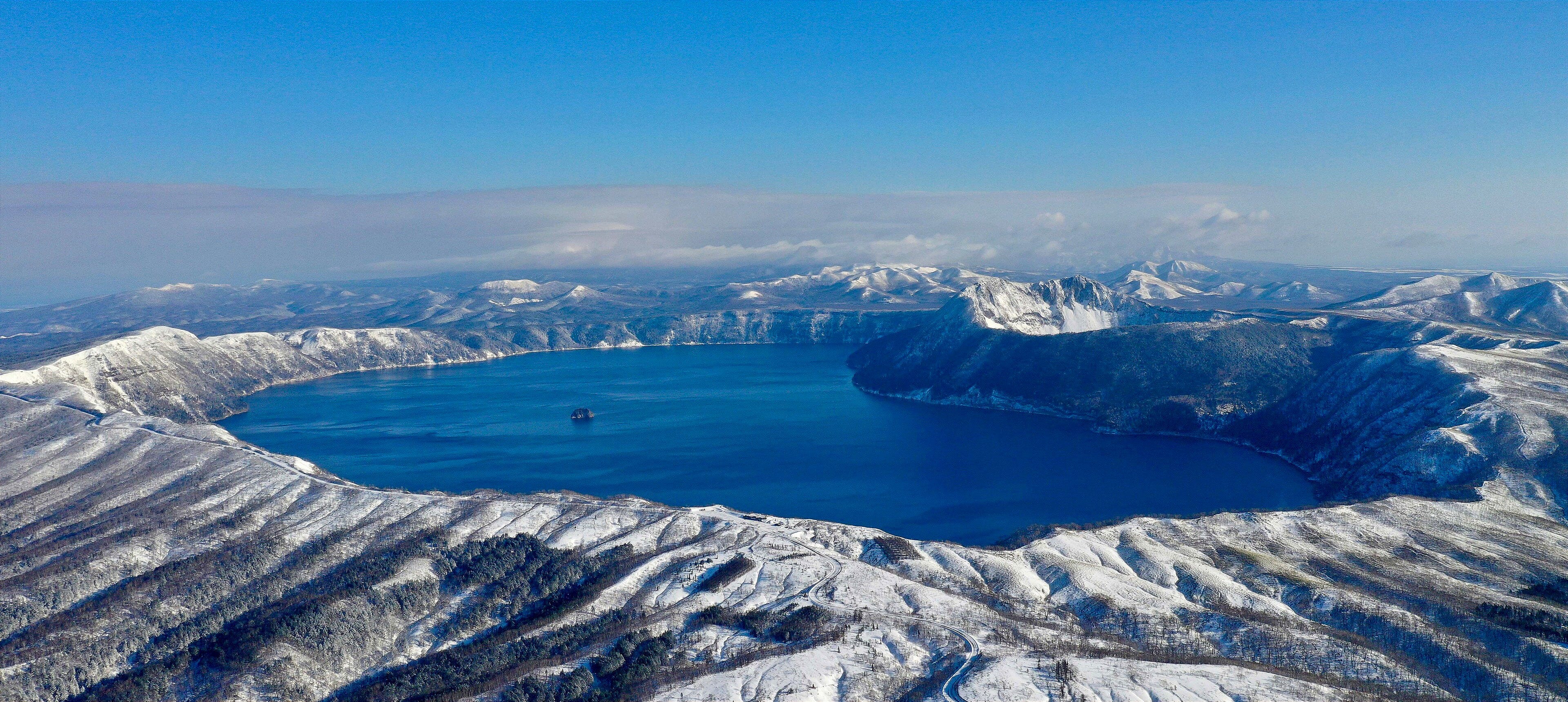
Lake Mashū | Hokkaido, Japan 🇯🇵
43°35′N 144°31′E
Earthview is a reader-supported publication devoted to climate change and the environment. Please consider a paid subscription to support the work we do and access premium content.
In Brief
🇦🇷 Argentina: The Moscardón Bumblebee (Bombus dahlbomii), native to Patagonia, has been officially nominated for the coveted Invertebrate of the Year distinction.
🇧🇷 Brazil: Small forest streams are transporting microplastics deep into the Amazon Rainforest, where they are now widespread across the entire ecosystem.
🇺🇸 United States: The state of Colorado is celebrating “Fat Marmot Week” in honor of the local marmot species (Marmota flaviventer).
🇺🇸 United States: A new study has found that rebounding cougar populations are saving human lives by reducing deer-related road deaths.
Planetary Pulse
Planetary Health — Latest figures
CO2: 430.78 PPM (+.34% YoY)1 | Temperature Anomaly: +1.42 C
Forest Cover: 31.8% | Protected Areas: 12.3% (17.3% terrestrial, 10.01% marine)
Emissions per Capita: 4.89 (World) | 9.1 (China) | 13.1 (USA) | 6.1 (EU) | 2.1 (India)
Low Carbon Electricity: 43.1% | Low Carbon Energy: 19.8% | EV New Sales: 30.6%2
The Other 74% 🌊
Regulations on shark-finning have failed to make a serious dent in the widespread and ecologically harmful practice.
AI companies are considering locating data centers in the ocean.
New Zealand has opened five new Marine Protected Areas (MPAs) over the summer, and a sixth will open soon.
Meet the Endangered
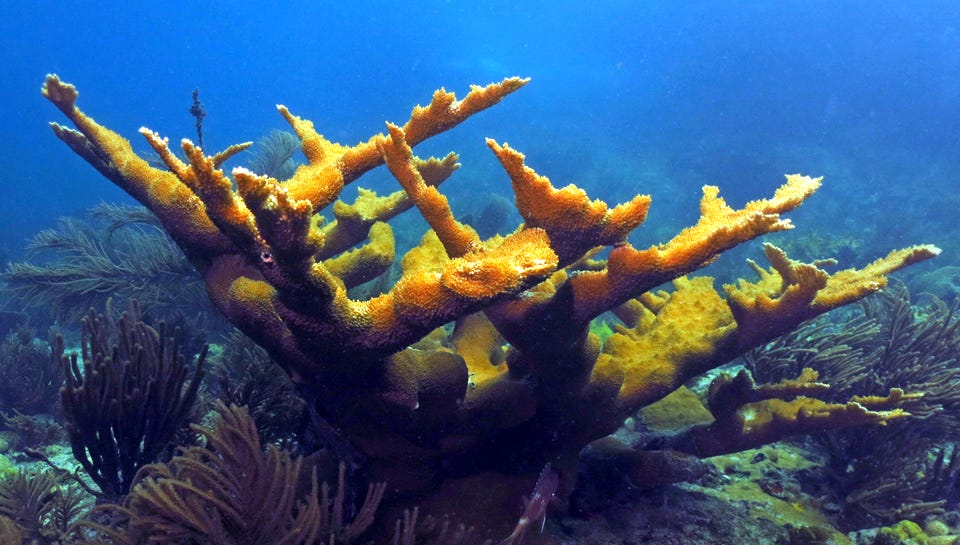
Elkhorn Coral (Acropora palmata)
Elkhorn Coral is one of the principal reef-building corals of the Caribbean Sea. It is also one of the species most endangered by climate change. Its populations have declined by 97% since 1980, and it is expected to be extinct or nearly extinct by 2100.
The Elkhorn is named for its branching structure, which resembles antlers. This structure provides habitat for a wide variety of other species. Elkhorn Coral reproduces slowly, and lives exclusively in shallow waters susceptible to thermal stress; both traits make it more vulnerable than most corals to climate change.
Conservation interventions are fiendishly difficult to perform on coral, as reefs cannot be transplanted and manual restoration by divers is extremely slow and expensive. The best hope for the species is the quickest possible cessation of carbon emissions.
IUCN: Critically Endangered (CR)
Earthview is a reader-supported publication devoted to climate change and the environment. Please consider a paid subscription to support the work we do and access premium content.
Latest daily figures
Latest quarterly global percentage (BEV +PHEV)