


The Green Party in England and Wales has voted to drop its longstanding blanket opposition to nuclear power, reports The Guardian. The vote represents a major change in its longtime anti-nuclear stance.
Its electricity generation policy still prioritises offshore wind, onshore wind, and rooftop solar as the primary sources of electricity, but allows elected representatives to support new nuclear reactors on a case-by-case basis.
Nuclear is a low-carbon technology, and is safe compared to other electricity generation options. Environmentalists should prefer renewables, but also be open to anything that helps mitigate the climate crisis. –DB
2. US Permitting Bill Splits Environmentalists
A bill percolating in the United States Congress that aims to streamline the federal permitting process is provoking a civil war in the environmental movement, explains Inside Climate News. The so-called “permitting deal” will make clean energy projects much easier to build, but will also help clear obstacles to building oil pipelines.
“America can’t confront the climate crisis and meet growing energy demand unless we can build clean energy faster—and that means fixing how we permit it”…
…“The permitting deal is a betrayal of public lands, water and wildlife, and environmental justice values that Westerners depend on for clean air and water, places to hike, hunt, and fish, and the inestimable sense of freedom the West provides us all…”
3. Supreme Court Takes on Climate Case
The US Supreme Court has begun hearing oral arguments in what could become a landmark climate change case, details NPR News. The county of Boulder in Colorado has sued fossil fuel companies, alleging their products caused economic damages via wildfires in its territory.
Boulder's lawsuit has not gone to trial; it's still in the early stages in the Colorado court system. But the energy companies are asking the U.S. Supreme Court to throw out the case now. The companies say only the federal government has the power and expertise to grapple with something as big as climate change.
Book of the Week

Climate Optimism: Celebrating Systemic Change Around the World | Zahra Biabani
Climate activist and writer Zahra Biabani reminds us that climate solutions not only exist, but are actively being deployed at scale. She also highlights how the fellowship of other activists can be the best inoculant to climate despair. –DB
Buy Now: Bookshop.org 🇺🇸 | Bookshop.org 🇬🇧
Help support Earthview and local independent bookstores by purchasing via the affiliate links above!
Good Climate News
1. World’s First EGS Geothermal Plant Opens
Geothermal startup Fervo Energy has started selling electricity from its first-of-a-kind Cape Station power plant in Utah, relays TechCrunch. Cape Station uses enhanced geothermal technology, which promises to generate low-carbon, 24-7 electricity at gigawatt-scale.
The entire site could be much larger, though, with the potential to generate as much as 4 gigawatts of electricity, Fervo previously told TechCrunch.
“No team has ever built a project like this anywhere in the world, and we did it ahead of schedule,” Fervo co-founder and CEO Tim Latimer said in a statement.
The opening of Cape Station could very easily become a monumental moment in the history of energy on Earth. –DB
2. Electric Truck Sales Are Booming
High diesel prices are supercharging sales of electric trucks, heralds Canary Media. This trend is particularly pronounced in China, where one-in-five medium to heavy trucks sold are now electric.
…the momentum for electric trucks has been building for years. But spiking diesel prices brought on by the Iran war have only strengthened the case for the vehicles, which are cheaper to operate and maintain but cost more upfront than their fossil-fueled counterparts. The higher the price of fuel, the quicker going electric pays for itself.
3. EVs Nine Times Cheaper Than Petrol in UK
Under ideal conditions, electric vehicles (EVs) can be up to nine times cheaper to run than petrol or diesel cars, notes Carbon Brief. This remarkable milestone is achieved both because of the recent surge in crude oil prices and by taking advantage of special off-peak electricity tariffs.
…petrol prices have surged by 31% since February to £1.72, based on government figures, with some locations reaching nearly £2 per litre…
These increases have been driven by oil prices jumping to more than $100 per barrel as the conflict between Yemen’s Houthis and Saudi Arabia escalates – a roughly 50% increase from June.
Our Blue Marble
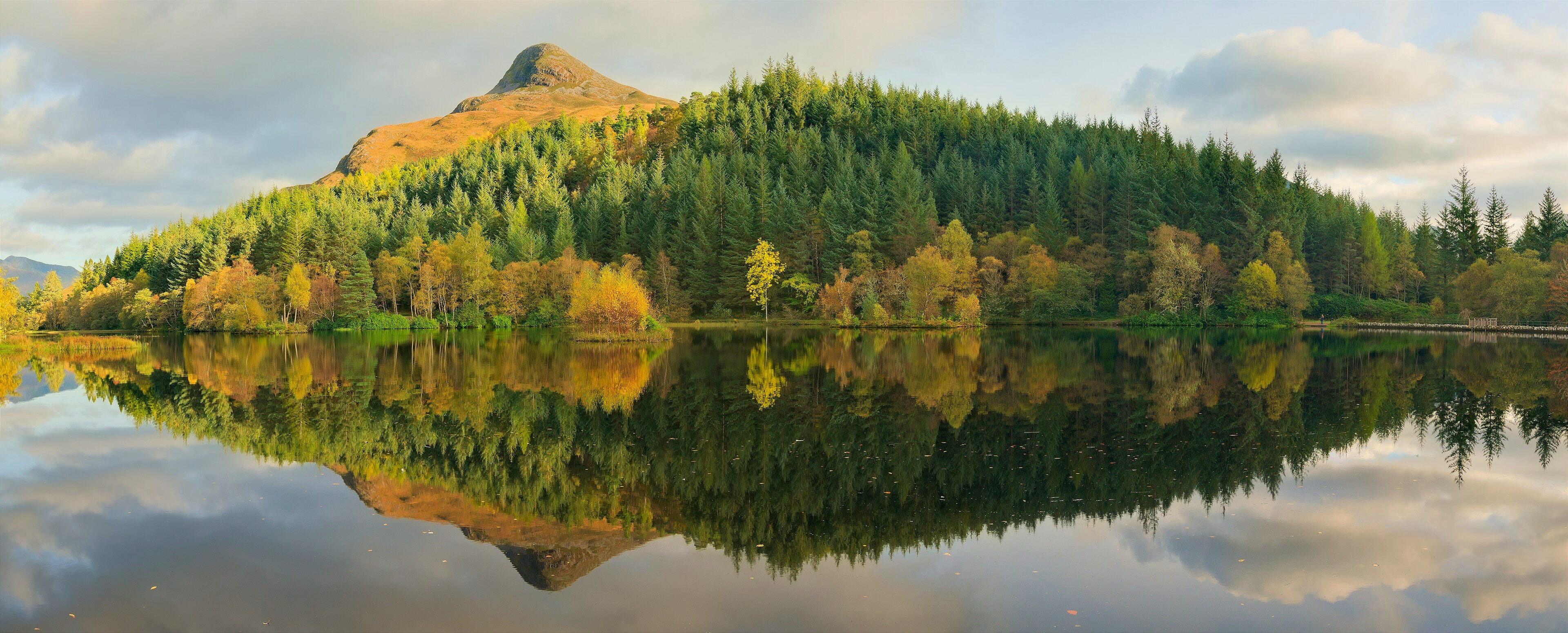
Glencoe Lochan | Scotland, United Kingdom 🏴
56.689°N 5.096°W
Earthview is a reader-supported publication devoted to climate change and the environment. Please consider a paid subscription to support the work we do and access premium content.
In Brief
🇧🇷 Brazil: The far-right candidate in Brazil’s presidential election won large majorities in areas of the Amazon rainforest most at risk of deforestation.
🇫🇷 France: Someone has written the word “HELP” on the lakebed of Lac des Brenets, which completely dried up this summer after record-breaking heat.
🇳🇵 Nepal: The search for survivors of August’s glacial flood has officially ended, with at least 5,285 still missing.
🇹🇷 Turkey: The host of this year’s COP31 climate summit has a growing problem with methane mega-leaks.
Planetary Pulse
Planetary Health — Latest figures
CO2: 430.78 PPM (+.34% YoY)1 | Temperature Anomaly: +1.42 C
Forest Cover: 31.8% | Protected Areas: 12.3% (17.3% terrestrial, 10.01% marine)
Emissions per Capita: 4.89 (World) | 9.1 (China) | 13.1 (USA) | 6.1 (EU) | 2.1 (India)
Low Carbon Electricity: 43.1% | Low Carbon Energy: 19.8% | EV New Sales: 30.6%2
The Other 74% 🌊
The first new penguin species in over 100 years has been found on the Kerguelen Islands.
The oceans absorbed a record 23 zettajoules in heat last year, equivalent to the energy of 12 Hiroshima-scale atomic bombs exploding every second for an entire year.
A new report disputes the assertion that deep-sea mining is economically viable.
Meet the Endangered

Blue-Eyed Ground Dove (Columbina cyanopis)
The Blue-eyed Ground Dove is perhaps the rarest bird in the world, with only 16 individuals remaining in the wild. The striking sapphire-lensed, cinnamic-frosted bird was thought to have gone extinct in the 1940s, but a small population reappeared in 2015.
The dove is native to the Brazilian cerrado, a sprawling tropical savanna humans are increasingly paving over with cattle ranches and soybean farms. The biggest threat is not humans themselves per se, but rather their canine companions. Domestic and wild dogs hunt the earthbound bird, which runs slowly and flies poorly.
Recent DNA analysis has revealed the Blue-eyed Ground Dove to be a living fossil - a relict species of an otherwise extinct genus - making its conservation all the more vital. Last year, a captive insurance population was established, and researchers hope to breed more for release back into the wild.
IUCN: Critically Endangered (CR)
Earthview is a reader-supported publication devoted to climate change and the environment. Please consider a paid subscription to support the work we do and access premium content.
Latest daily figures
Latest quarterly global percentage (BEV +PHEV)