


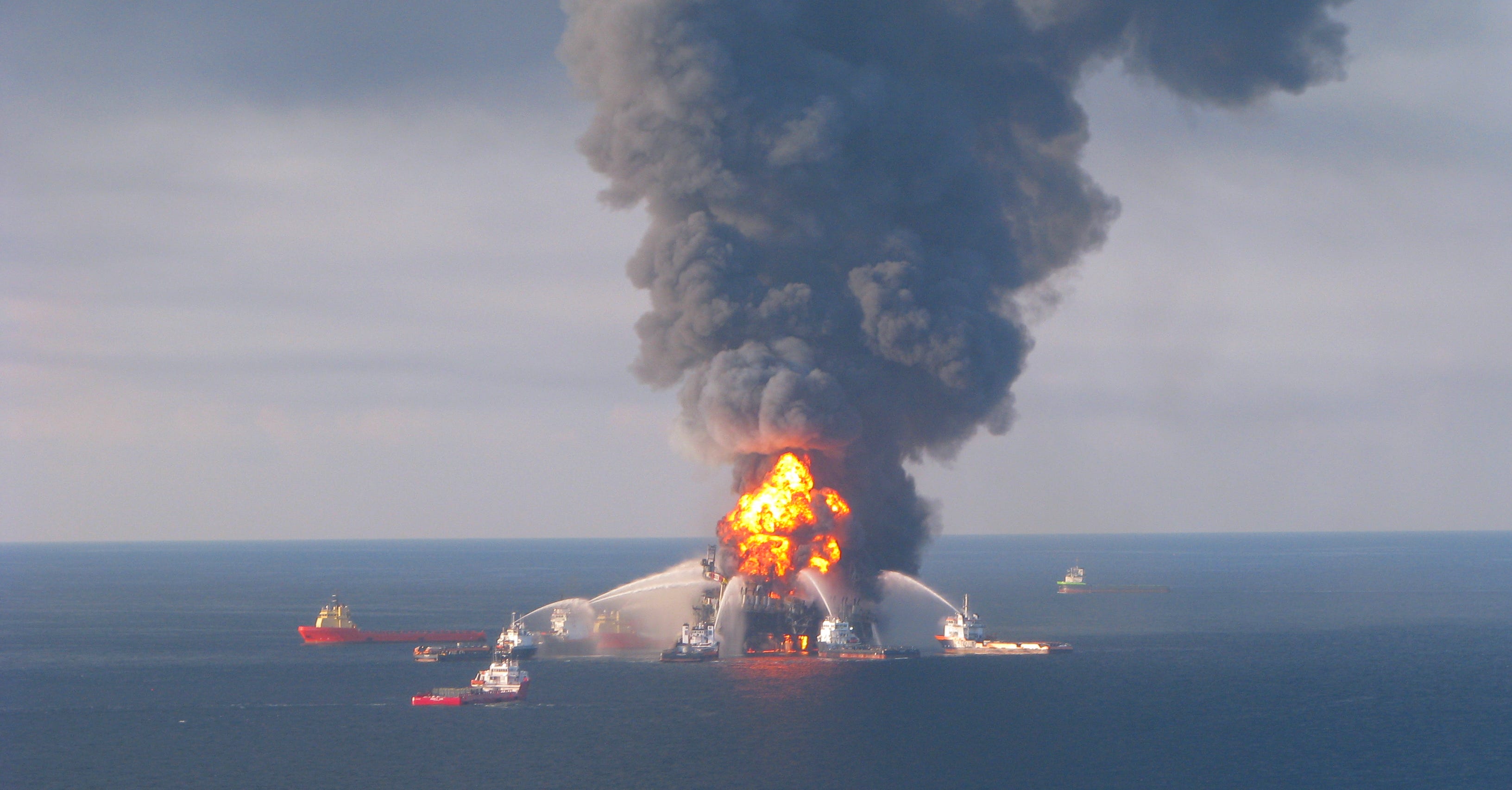
Aside from contributing to climate change and air pollution, liquid petroleum hydrocarbons also pose the danger of spilling into the broader environment.
Oil spills create havoc in ecosystems by physically smothering small animals and releasing toxins into the food chain. Here are the seven largest oil spills in history:
7. Fergana Valley
285,000 tonnes | 1992
The worst oil spill on the Asian continent occurred in 1992 in the newly post-Soviet state of Uzbekistan. On March 2, a well in the fertile Fergana Valley suffered a blowout — spilling oil onto the surrounding plains.
About a month later the oil slick caught fire, poisoning the skies too. With technical assistance from the US government, the blowout was finally capped in early May.
6. Atlantic Empress
287,000 tonnes | 1979
On July 19th, 1979, two massive oil tankers — the Atlantic Empress and the Aegean Captain — collided in a storm off the coast of Tobago. 27 sailors were killed.
Although the Aegean Captain managed to limp to port and salvage her cargo, the Atlantic Empress was not so lucky. She remained afire and adrift for several more days, exploding several times before finally sinking on July 29th.
The environmental damage was mitigated by the depth of the sea at the impact point and the fact that so much of the oil had burnt off.
5. Ixtoc
480,000 tonnes | 1979-1980
On June 3, 1979 an offshore oil rig operated by Pemex — Mexico’s state oil company — suffered a catastrophic blowout and began spewing oil into the Gulf of Mexico. It would not stop for another 10 months.
In many ways a precursor to the larger Deepwater Horizon spill, Ixtoc was less environmentally damaging due to its occurrence at much shallower depths — which allowed more oil to naturally biodegrade in sunlight.
4. Taylor Energy
490,000 tonnes | 2004-Present
In 2004 Hurricane Ivan destroyed an offshore oil rig operated by Taylor Energy off the coast of Louisiana in the Gulf of Mexico. The hurricane caused an underwater landslide — severing 28 wells from the platform and leaving them leaking 145 meters below the seabed.
The bizarre nature of the accident made the leak impossible to seal. It has continued leaking oil ever since. Remarkably, no one outside the company and a few regulators noticed the spill until the 2010 Deepwater Horizon accident brought closer scrutiny to the region. Remediation efforts continue.
3. BP Deepwater Horizon
627,000 tonnes | 2010
The Deepwater Horizon saga is the most dramatic oil spill in living memory, spawning wall-to-wall television coverage in 2010 and many books, documentaries, and Hollywood films in the years since.
It began on April 20, 2010 when the BP-operated Deepwater Horizon offshore oil rig suffered a catastrophic wellhead blowout — killing 11 and injuring 17. For the next 87 days, the well spewed crude oil into the Gulf of Mexico at a rate never seen for a marine oil spill before or since. The economic and ecological damages have been immense.
2. Persian Gulf War Oil Spill
820,000 tonnes | 1991
In January 1991, Iraqi dictator Saddam Hussein deliberately released massive amounts of oil into the Persian Gulf in an attempt to prevent an amphibious landing by American forces during the Persian Gulf War.
About 2% of Kuwait’s entire oil reserves were dumped — with profound ecological effects lasting to the present day. Given its intentional nature, the Persian Gulf War Oil Spill is commonly considered an act of ecological terrorism.
1. Lakeview Gusher
1,230,000 tonnes | 1910-1911
The largest oil spill in history happened near Bakersfield, CA in the early 20th century. Early drilling technology lacked blowout preventers and on the 15th of March 1910, a Lakeview Oil Company well suffered a catastrophic blowout.
Rivers of crude oil were released into the surrounding area, about 40% of which was ultimately captured by constructing makeshift dikes and pipelines. The unforeseen supply shock crashed the global oil price.