


Complex life first evolved in the oceans. So it is perhaps no surprise that the watery depths of our planet contain a broader, more genetically diverse array of animals.
Here are seven of the weirdest marine animals:
7. Yeti Crab
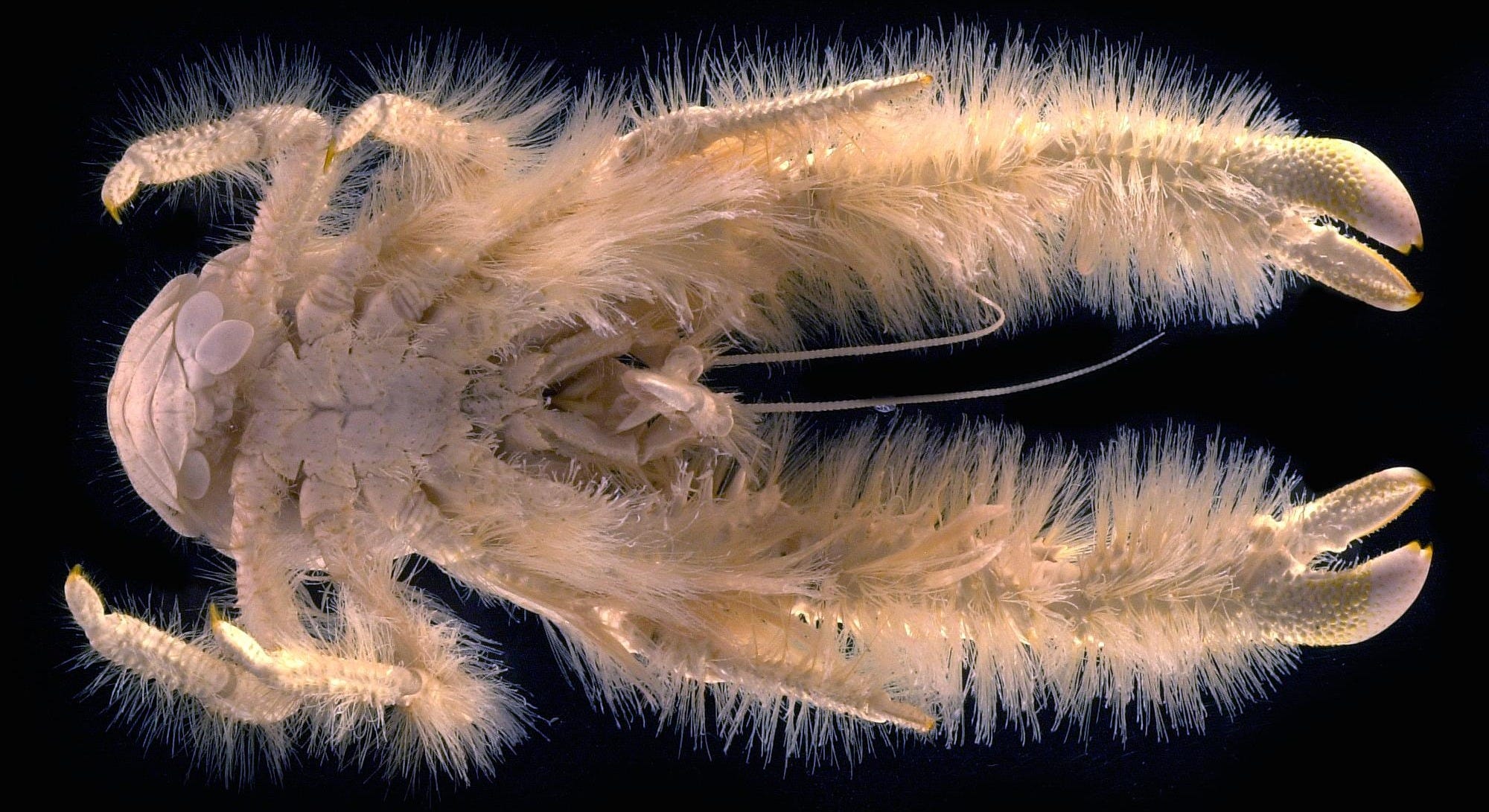
The Yeti Crab was only discovered in 2005, when researchers using remote submarines to explore hydrothermal vents 1,500 km (930 mi) south of Easter Island stumbled upon the creature at a depth of 2,200 m (7,200 ft). Inhabiting an abyssal darkness, the crab is thought to be fully blind.
Its thick fur-like covering - called setae - gives the Yeti Crab a uniquely strange appearance. These setae evolved to serve as a sort of bacteria farm, attracting various species to reside on the surface. The crab feeds these bacterial colonies by exposing them to nutrient-rich hydrothermal plumes, and then harvests them for food.
Kiwa hirsuta | IUCN: Not Evaluated (NE)
6. Vampire Squid
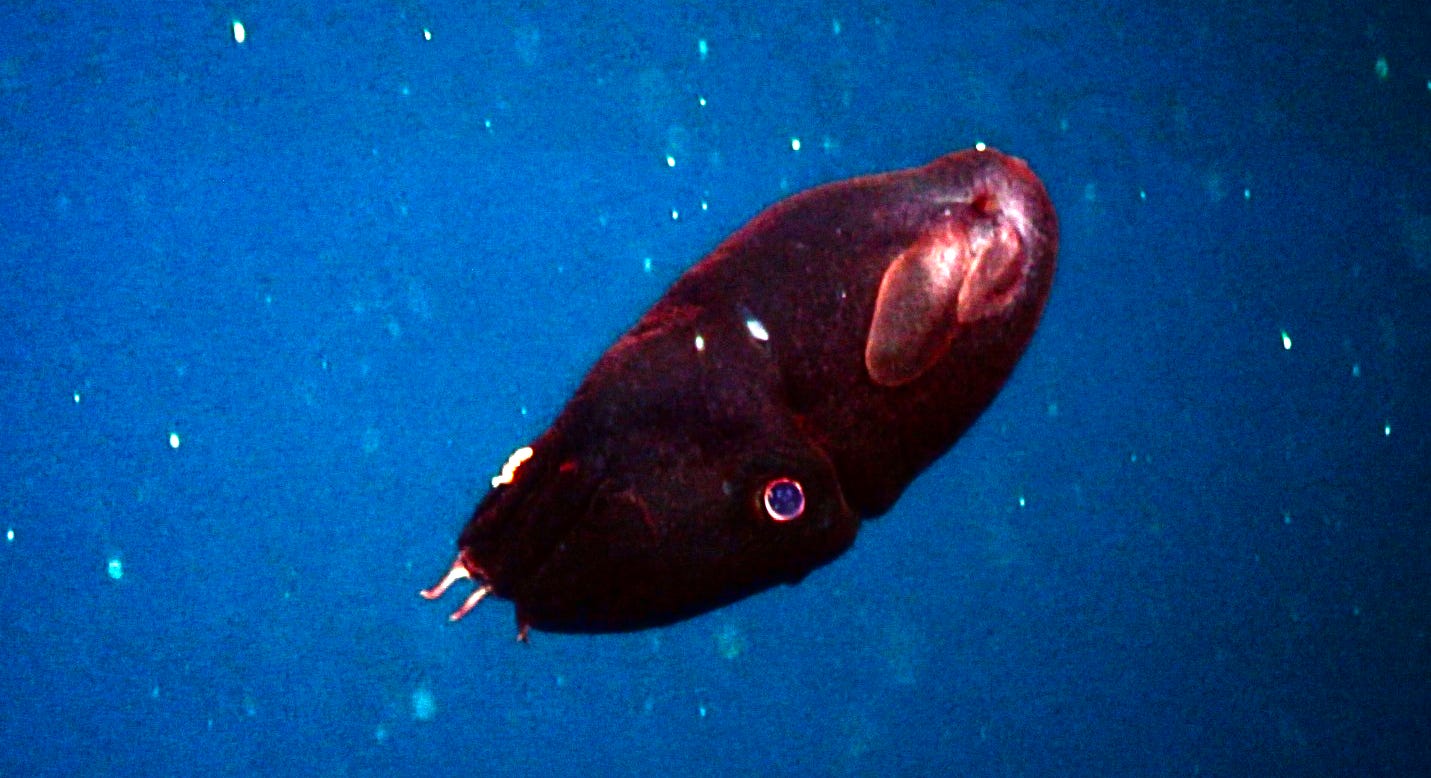
The Vampire Squid has one of the most fearsome names in all of biology. But in reality, the ‘squid from hell’ is a small, gentle creature that hurts nobody.
It does indeed live in the infernal depths of the extreme deep sea - typically between 600 to 1,200 m (2,000 to 4,000 ft). But it is only 30 cm (1 ft) long. And it feeds exclusively on marine snow - the detritus of other marine animals that falls naturally into the depths below. A living fossil, it is a relic of an ancient lineage that dates back to the Jurassic period.
Vampyroteuthis infernalis | IUCN: Not Evaluated (NE)
5. Sarcastic Fringehead
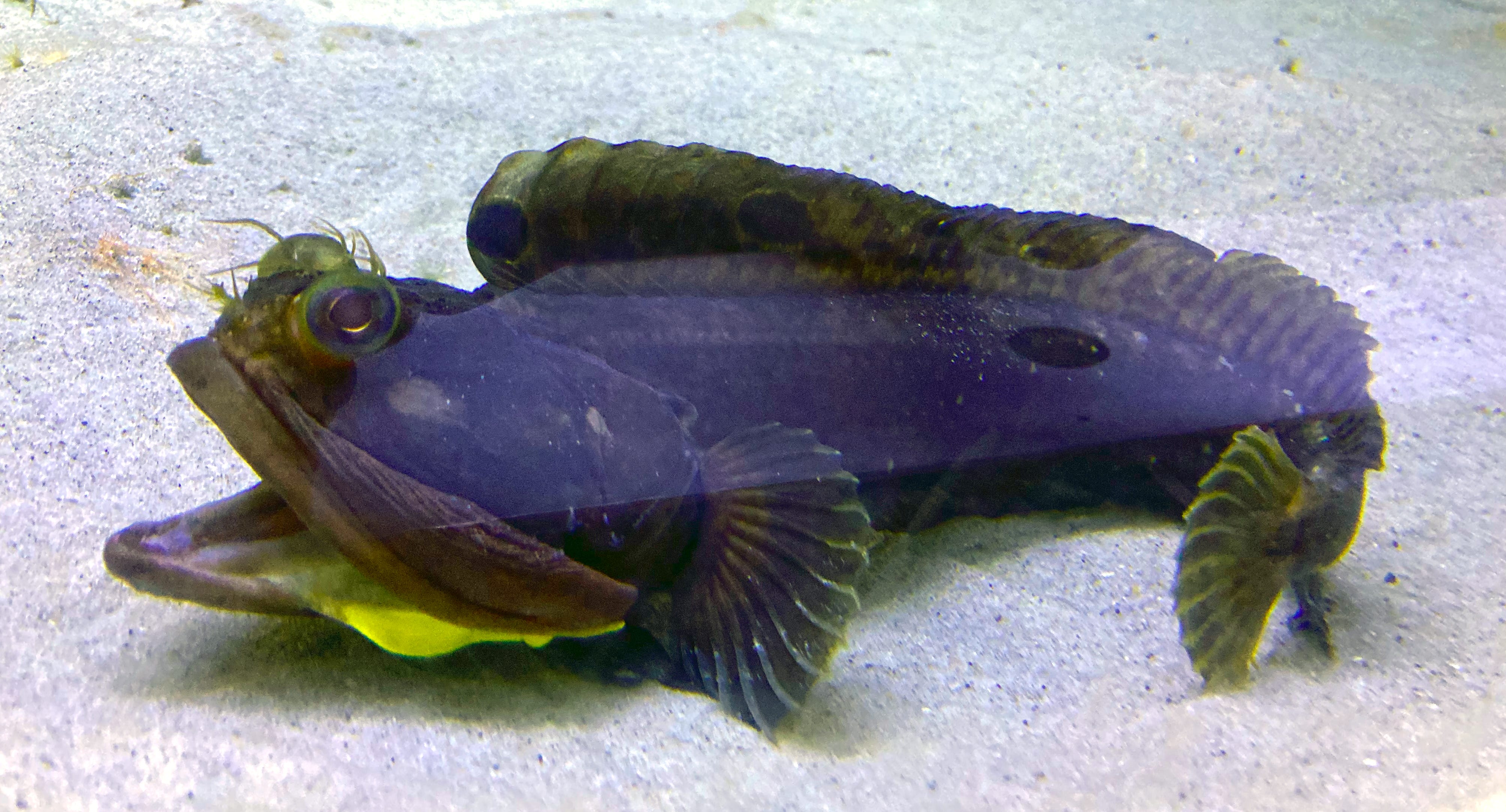
The English word ‘sarcastic’ derives from the ancient Greek sarkázein, which literally means ‘to tear flesh’. It is in this sense that the Sarcastic Fringehead is named. Their comically wide mouths are used not only for feeding but also for viciously battling one another for territory or mating partners.
Neoclinus blanchardi | IUCN: Least Concern (LC)
Get Earthview in your inbox:
And consider a paid subscription to access premium content and support the work we do!
4. Blue Sea Dragon
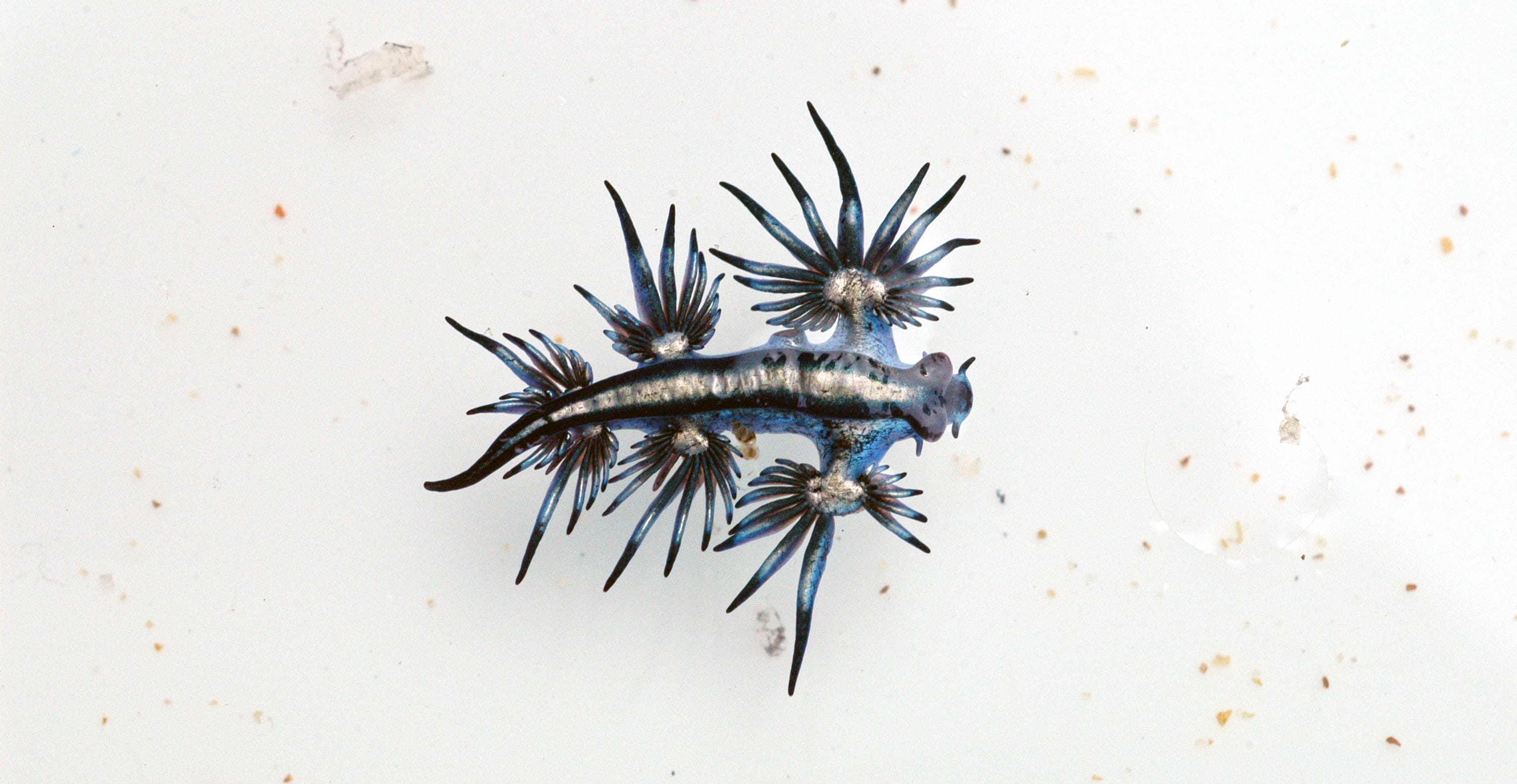
The Blue Sea Dragon is a type of sea slug that looks downright alien and is sometimes referred to as a ‘living Pokemon’. It floats upside-down on the ocean surface by ingesting an air bubble and storing it in its stomach. It feeds by performing a similar trick - stealing venom from predators, concentrating the venom in its own body, and then using it to catch prey. It can stun fish 300 times its own size.
Glaucus atlanticus | IUCN: Not Evaluated (NE)
3. Sea Pig
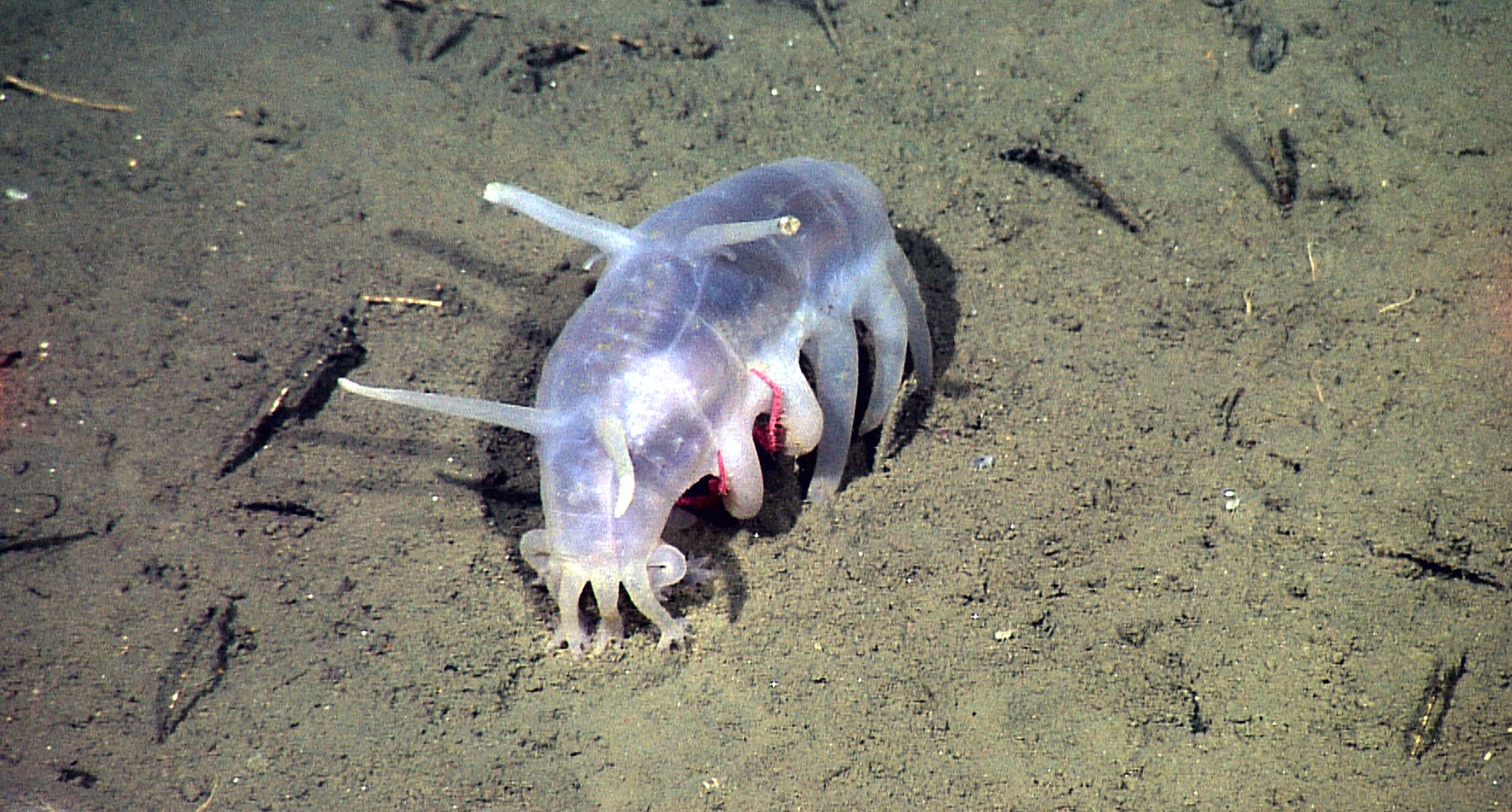
The sea pig is a type of sea cucumber that lives on the deep ocean floor, typically at depths between 3,000 - 5,000 m (9,843 - 16,404 ft). It is as weird as it looks - breathing through its anus, using a system of hydraulic legs for locomotion, and sporting flesh full of toxins to ward off predators.
Scotoplanes globosa | IUCN: Not Evaluated (NE)
2. Blanket Octopus
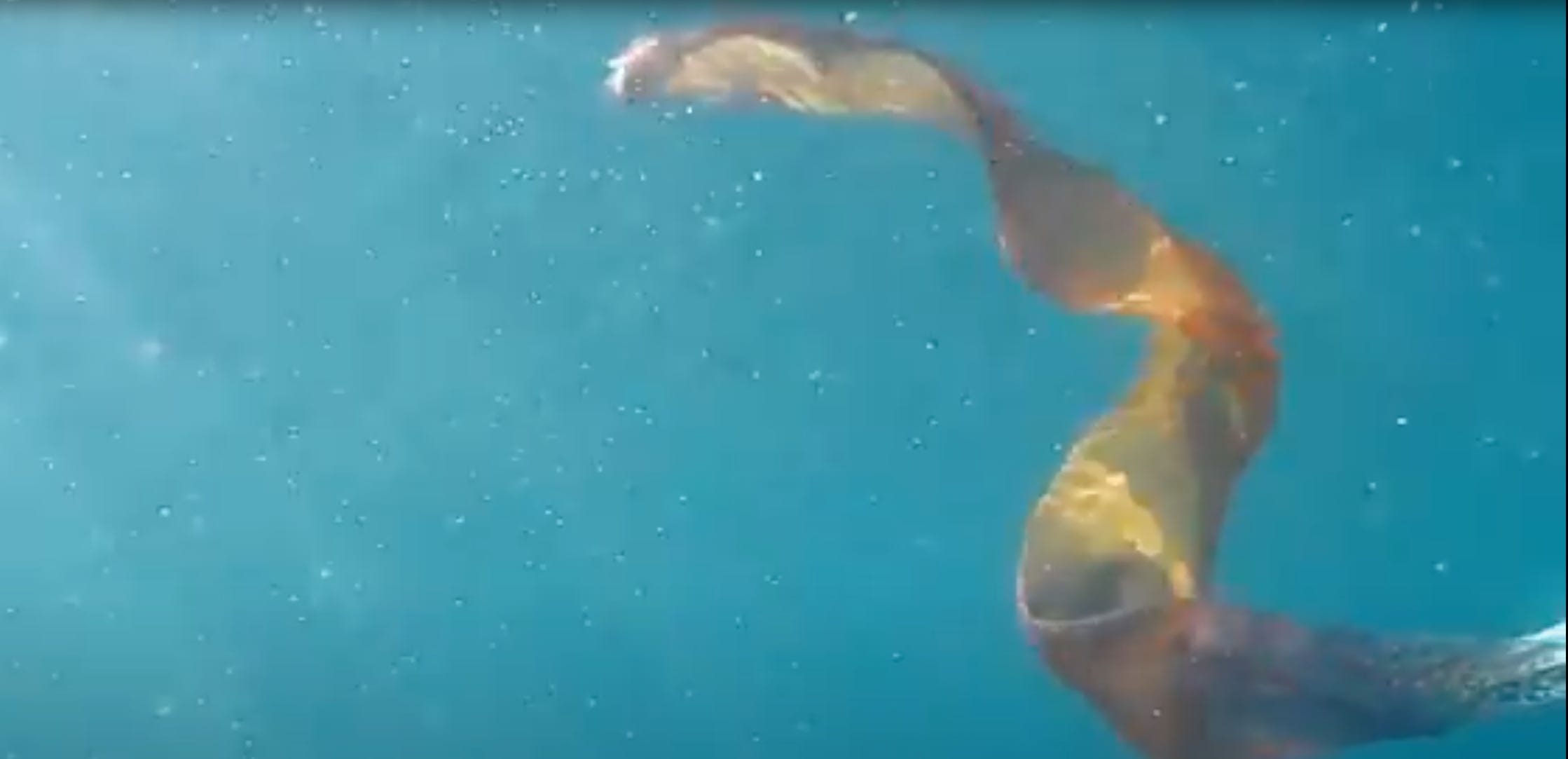
The Blanket Octopus displays the most extreme sexual size dimorphism of any animal. Females can grow up to 2 m (6.6 ft) in length. The male, however, is 10,000 times smaller - the size of a walnut.
Its method of sexual reproduction is equally bizarre. When a male finds a female, he detaches his sperm-filled arm, which then autonomously crawls inside the female to fertilize her eggs. The male then dies. The female body may hold the arms of several males at a time.
Tremoctopus violaceus | IUCN: Least Concern (LC)
1. Pacific Barreleye Fish
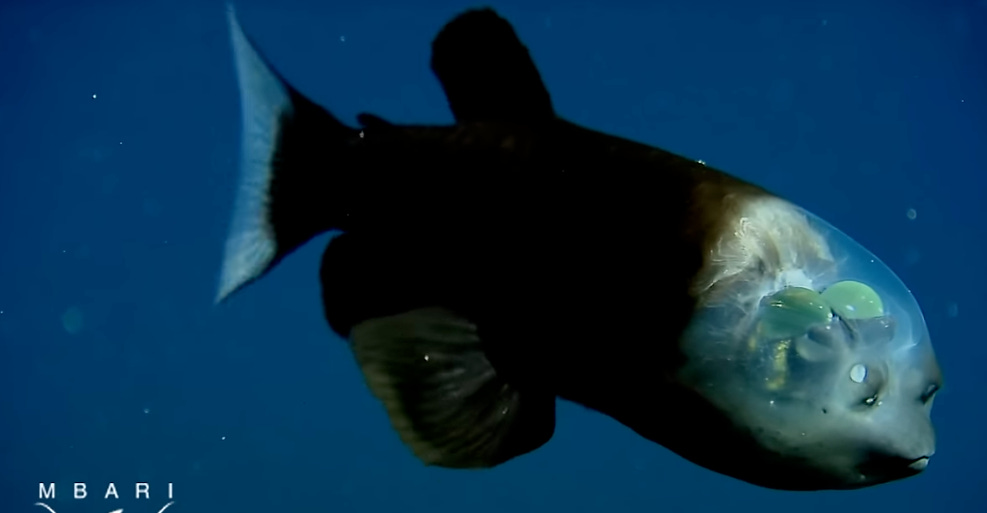
The Pacific Barreleye fish looks like an alien spaceship - with a fluid-filled transparent dome atop its head. Inside are complex eyes that serve as a sort of powerful night-vision to find prey in the watery depths.
Macropinna microstoma | IUCN: Not Evaluated (NE)
Get Earthview in your inbox:
And consider a paid subscription to access premium content and support the work we do!