


July is the warmest month in the Northern Hemisphere, as thermal inertia delays by a few weeks the impact of peak axial tilt in late June. The absolute hottest place on Earth is North America’s Death Valley, which recorded a high temperature of 54°C (129.2°F) in 2016. But in terms of inhabited settlements, the Middle East dominates the leaderboard.
These places are dangerous to live in now, and climate change will only make things worse. Here are the seven hottest cities on Earth1, ranked by average daily high in their hottest month of the year:
7. Medina 🇸🇦
Temp: 44.3°C (111.7°F)
Medina in Saudi Arabia is the second-holiest city in Islam and the cradle of global Islamic civilization. Founded in the 9th century B.C. on the site of a natural desert oasis, the city is now a modern metropolis home to over 1.5 million people. The punishing heat in summer is a major public health threat to the millions of religious pilgrims who visit each year.
6. Baghdad 🇮🇶
Temp: 44.8°C (112.6°F)
Iraq’s ancient capital along the Tigris contains over 8 million people, around a quarter of the country’s entire population. In the summer months, the power grid struggles to handle the air conditioning load—to which only a minority of the population has access. Shifting work and commuting to cooler parts of the day has become the primary means of adaptation. Like many cities with long histories of extreme heat, Baghdad only really comes alive at night.
5. Khartoum 🇸🇩
Temp: 44.9°C (112.8°F)
Sudan’s capital faces a long summer that offers the worst of both worlds. In early summer, extreme dry heat bakes the city. In late summer, a blanket of humid, tropical heat smothers it. All this takes place in a dystopian conflict zone where power and water services rarely function.
4. Jacobabad 🇵🇰
Temp: 45.6°C (114.1°F)
Jacobabad in Pakistan’s Sindh province is the hottest city in South Asia and among the most inhospitable inhabited places in the world. Like Khartoum, it is located in the liminal space between a hot, dry desert and an alluvial plain—meaning it gets both extreme heat and humidity. Access to electricity is spotty, and most people work outdoors as agricultural laborers.
3. Ahvaz 🇮🇷
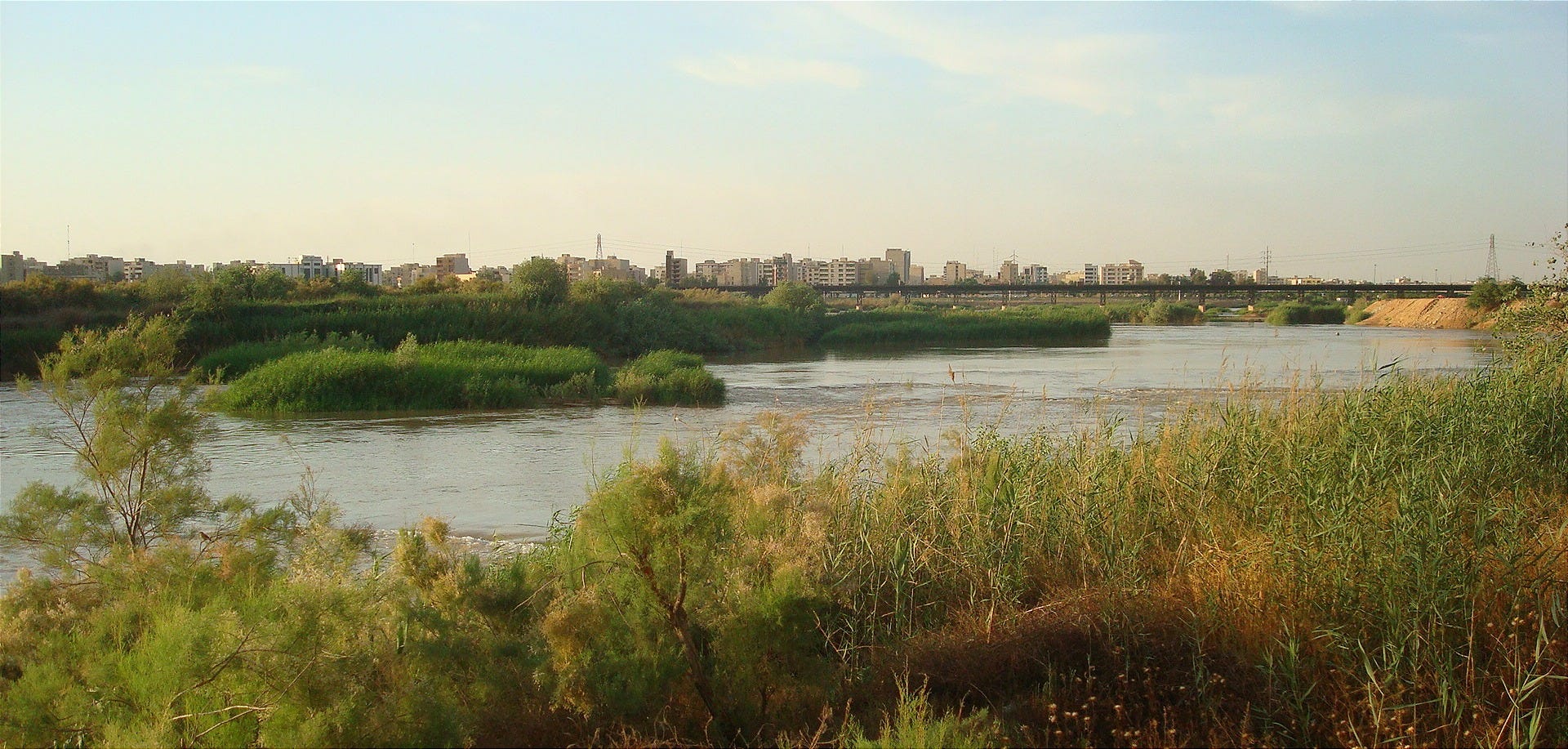
Temp: 46.3°C (115.3°F)
Ahvaz in Iran’s Khuzestan Province lies along a Mesopotamian alluvial plain neighboring that which contains Basra and Kuwait City. Near the border of Iraq, it’s a multicultural city of 1.5 million Arabs, Persians, Qashqai, Kurds, and others. In summer, the baking heat combines with humidity blowing in from the Persian Gulf, creating a dangerously high heat index. The health impacts of the heat are exacerbated by equally extreme air pollution.
2. Basra 🇮🇶
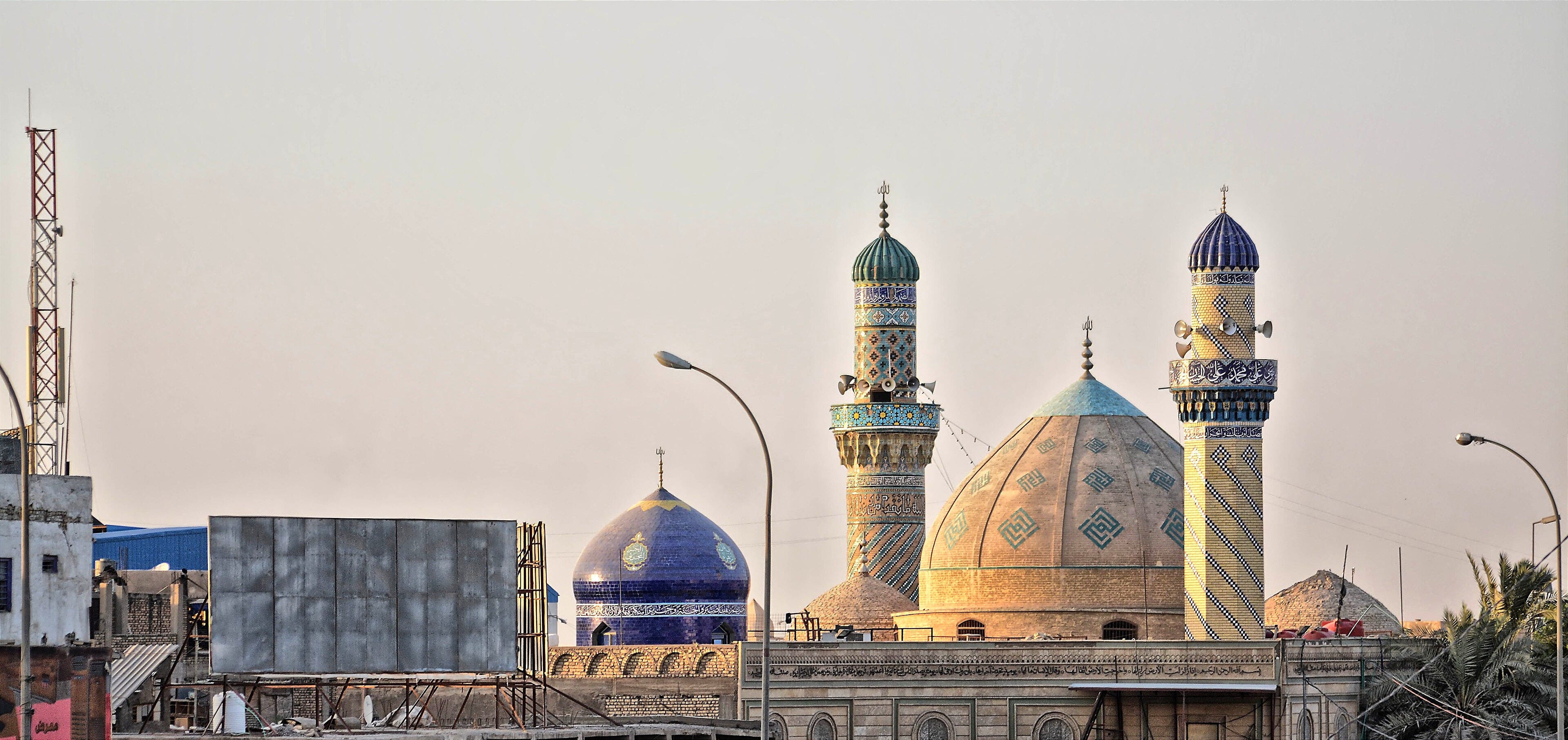
Temp: 46.5°C (115.7°F)
Basra is the third-largest city in Iraq and the cultural and economic capital of the southern part of the country. Located near the Iranian border, it just edges out nearby Ahvaz for summer heat. A modern metropolis of 1.5 million, it is an industrial powerhouse focused on petrochemicals and oil export. The highest temperature ever recorded in Iraq was measured in Basra on July 22, 2016, at 53.9°C (129°F).
1. Kuwait City 🇰🇼
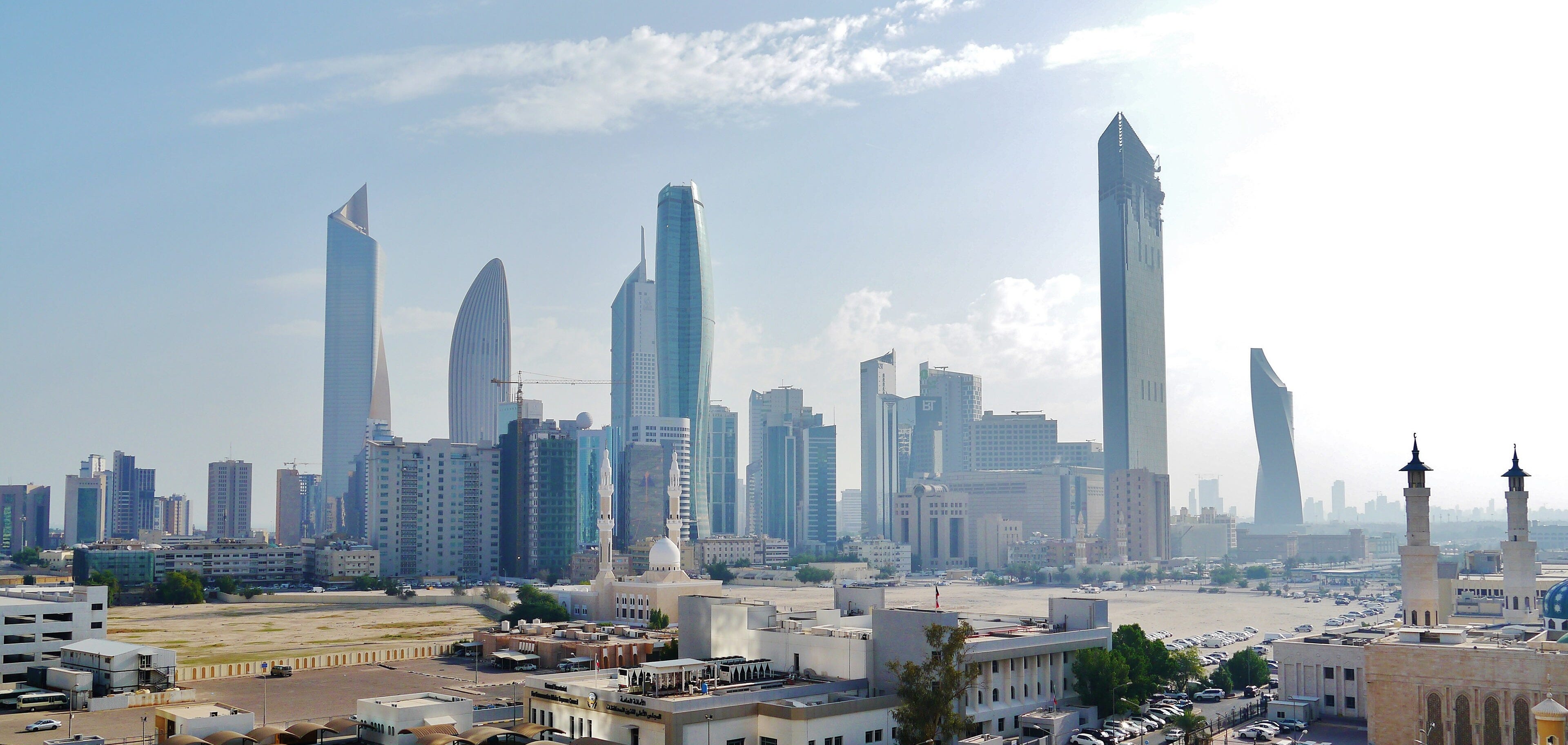
Temp: 46.8°C (116.2°F)
The hottest city in the world is Kuwait City. Kuwait lies in the same general region of lower Mesopotamia as Ahvaz and Basra. However, the city is much larger at a population of 3 million people and much wealthier, which means more development and thus more concrete. All this concrete creates a pronounced urban heat island effect, exacerbating the natural climate and pushing it to the top of the list.
Major cities with populations over 50,000