


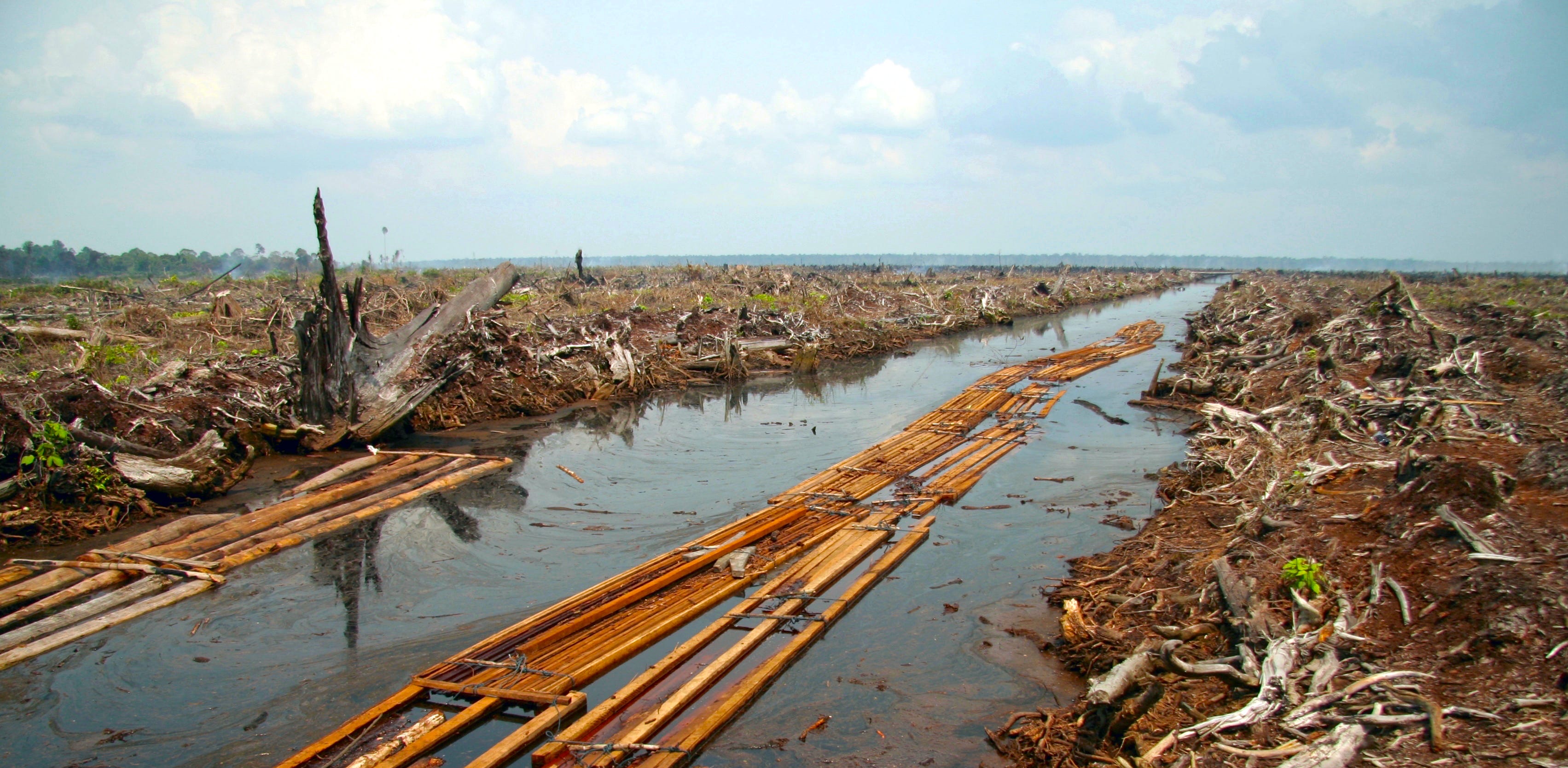
Deforestation destroys biodiversity and accounts for around 12% of global carbon emissions. In the 21st century, forests in temperate areas are relatively well-managed and capable of regrowth after disruption. Tropical deforestation, however, is more widespread and often permanent. It remains a major ecological crisis.
Here are the seven countries that experienced the worst deforestation in 2025, measured in hectares of primary forest lost:
6. Madagascar 🇲🇬
~100,000 ha
An island micro-continent off the coast of Southeast Africa, Madagascar has some of the most unique endemic forests in the world. It is home to the majestic Baobab Tree (genus Adansonia) — famous the world over for its towering, skyscraper form.
Baobabs are generally too large to be cut down. Rather, they often survive like zombies, looming over the razed forests around them. Madagascar is one of the poorest countries on Earth. Tragically, its deforestation is mostly the result of slash-and-burn subsistence agriculture.
5. Peru 🇵🇪
~170,000 ha
While large, corporate ranches drive deforestation in neighboring Brazil, the story in Peru is quite different. Severe poverty in the Andes Mountains is driving migration into the country’s Amazon rainforest, where newcomers establish small slash-and-burn subsistence farms.
Illegal gold mines and coca farms are also major factors.
4. Indonesia 🇮🇩
296,000 ha
Indonesia is home to the third-largest rainforest in the world, but it has lost 21% of its total forest cover since 2000 — mostly to palm oil plantations and small-scale slash-and-burn agriculture. The crisis peaked in 2016, when the nation lost over 1,000,000 ha of forest in a single year.
Global outrage led to new supply-chain rules that forced better regulation. There has been a dramatic decrease in the deforestation rate. But recent signs point to an uptick in the past few years — this time driven by nickel mines and food plantations in Papua.
3. Congo (DRC) 🇨🇩
~500,000 ha
The Democratic Republic of Congo is one of the poorest countries in the world, and the state has little capacity to enforce environmental protections. Unlike in most tropical forests — where there is a clear deforestation frontier — the story in the DRC is “death by 1,000 cuts” as small villages deep in the forest expand outward.
Despite having massive hydroelectric dams, the DRC lacks the electric grid needed to distribute its electricity generation across its enormous territory. As a result, most Congolese also rely on felling forests for charcoal.
2. Bolivia 🇧🇴
620,630 ha
Bolivia has lost 16% of its forest canopy since 2001, and — unlike most nations on this list — the situation is only getting worse. The culprit is industrial-scale agriculture in the Santa Cruz region, where soy plantations and cattle ranches are rapidly encroaching on the Amazon.
Strangely, this circumstance is encouraged by the government, which prioritizes the development of the country’s agricultural export industry over ecological concerns.
1. Brazil 🇧🇷
1,630,000 ha
Brazil is home to 60% of the Amazon rainforest, and as such is the custodian of the largest patch of intact tropical forest on Earth. It has lost 11% of its forest canopy since 2001 — driven almost entirely by industrial-scale cattle ranching and soy production.
Brazil has the state capacity to fight deforestation. But whether it has the political will depends entirely on which government is in office. Deforestation surged during the right-wing Bolsonaro government (2019-2023), but has plummeted under his left-wing successor Lula da Silva (2023-).
The current government has a target to reach zero illegal deforestation by 2030, but this depends entirely on the left staying in power after this year’s elections.
Earthview is a reader-supported publication devoted to climate change and the environment. Please consider a paid subscription to support the work we do and access premium content.