


Over 300,000 people were evacuated from advancing wildfires in Spain and France over the weekend, reports France 24. The fires threatened the major cities of Madrid and Bordeaux, which remained in peril as of Monday morning.
The fires in Spain and France spread rapidly because of tinderbox conditions worsened by successive heatwaves both countries have experienced since May. Scientists say global warming is increasing droughts and making weather emergencies more extreme and more frequent.
Remember, this fire season will likely be one of the mildest of the century. –DB
2. Meta Kicked Out of Pro-Renewables Group
Big Tech giant Meta—owner of Facebook and Instagram—has been kicked out of a pro-renewables industry group due to its plans for multiple data centers powered by polluting fossil gas, explains Recharge.
The tech giant is among the hyperscalers ramping up new gas capacity to power its data centres. In March, Meta reached an agreement with Entergy Corp. to build seven new gas-fired power plants in Louisiana, delivering more than 5 GW of capacity for its largest data centre to date.
3. Wildfire Smoke Dampens Solar PV Generation
The recent wildfires in North America impaired solar generation, notes PV Magazine. Generation was down by about 10% as smoke blocked some of the sun’s radiation.
Smoke travelled south-east across southern Ontario and Quebec before extending into the US Midwest and Northeast. Toronto, Chicago, Detroit and Minneapolis recorded some of the world’s poorest air quality during 14–17 July, while alerts were issued across more than 20 US states.
Book of the Week

Ferns: Lessons in Survival from Earth’s Most Adaptable Plants | Fay-Wei Li and Jacob S. Suissa
Ferns! Explore these primal plants with two world-leading experts. This beautifully illustrated tome explains the 400 million-year evolutionary history of ferns, their interactions with humans, their deeply strange method of reproduction, and much else. An excellent primer on this oft-overlooked and underrated group of non-flowering plants. –DB
Buy Now: Bookshop.org 🇺🇸 | Bookshop.org 🇬🇧
Good Climate News
1. China to Expand Wind and Solar by 50%
China has announced plans to increase wind and solar generation by 50% over the next five years, relays Reuters. China is also planning an increase in pumped-hydro storage to help mitigate intermittency.
It calls for building deep-sea offshore wind bases, suggesting Beijing may in future apply the centralized, large-scale development model used for its desert wind and solar megabases to offshore wind projects as well.
2. A Record Summer for Solar in Europe
Solar energy is setting new records in Europe this summer, heralds Canary Media. Solar PV provided 25% of the continent’s electricity in June.
Several countries, including Spain and Germany, received more than one-third of their electricity from solar in June; in Hungary, it supplied nearly 50%. The data highlights Europe’s rapid solar adoption. Five years ago, solar delivered around 10% of the EU’s electricity even in the sunniest months.
3. Idaho Bets Big on Solar
The US state of Idaho has completed one large solar project and is planning a bigger one, details Electrek. The conservative, rural Western state—known primarily for its potatoes—now has around 1 GW of solar either built or in some stage of development.
Idaho isn’t a solar heavyweight yet – it’s actually a big hydropower state – but it’s making headway. As of June 2026, the state had installed 1,301 MW of solar, ranking 34th in the US, according to the Solar Energy Industries Association (SEIA). Solar now supplies 9.01% of Idaho’s electricity…
Texas and California dominate the US solar industry, but there is enormous growth potential in smaller states. –DB
Our Blue Marble
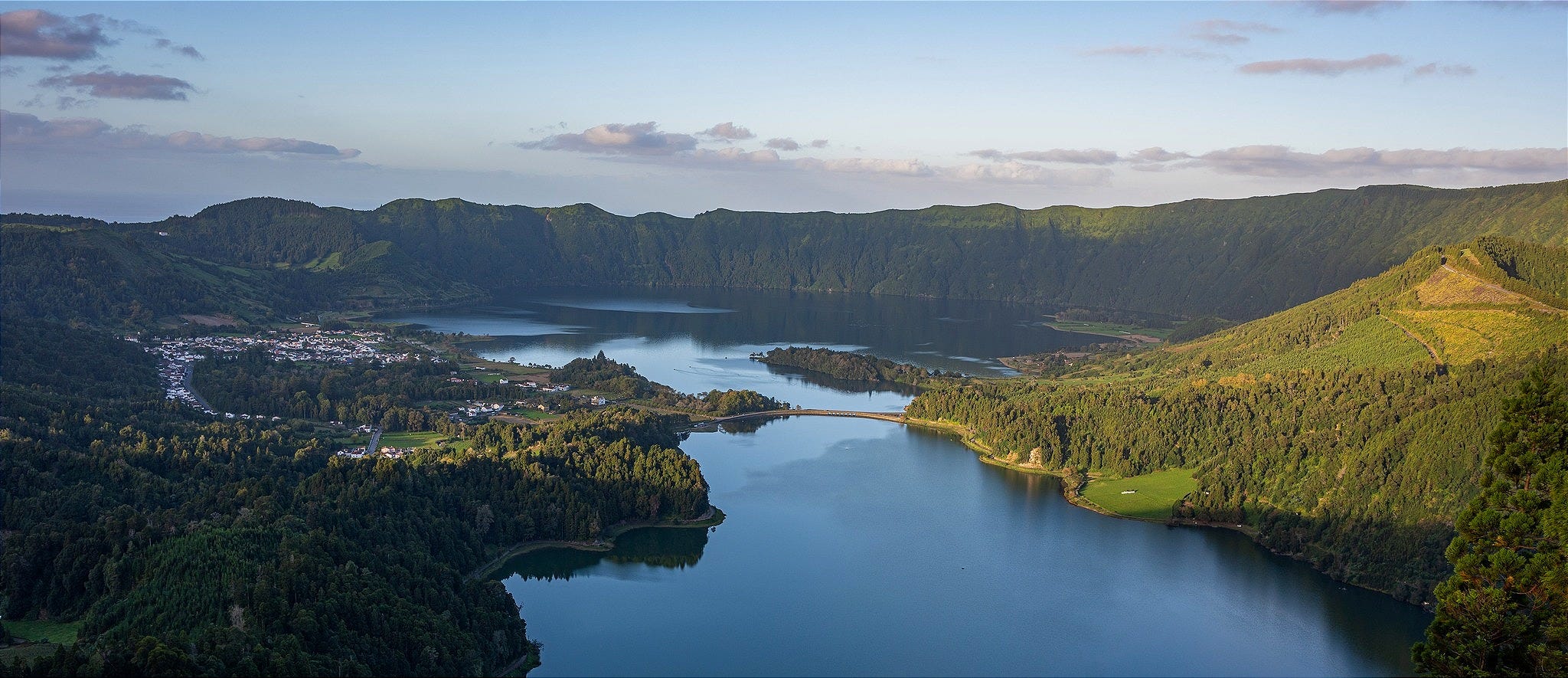
Lagoa das Sete Cidades | São Miguel Island, Portugal 🇵🇹
37°51′18″N 25°47′11″W
Earthview is a reader-supported publication devoted to climate change and the environment. Please consider a paid subscription to support the work we do and access premium content.
In Brief
🇰🇭 Cambodia: A new report details how illegal traffic in endangered animals—including tigers and rhinos—is booming to serve the Chinese market.
🇫🇷 France: The repeal of a ban on two controversial pesticides has angered beekeepers.
🇮🇳 India: At least 50 are dead and 500,000 displaced by monsoons exacerbated by climate change.
🇺🇬 Uganda: A new conservation park has been inaugurated to help protect giraffes from oil and gas development.
Planetary Pulse
Planetary Health — Latest figures
CO2: 430.78 PPM (+.34% YoY)1 | Temperature Anomaly: +1.42 C
Forest Cover: 31.8% | Protected Areas: 12.3% (17.3% terrestrial, 10.01% marine)
Emissions per Capita: 4.89 (World) | 9.1 (China) | 13.1 (USA) | 6.1 (EU) | 2.1 (India)
Low Carbon Electricity: 43.1% | Low Carbon Energy: 19.8% | EV New Sales : 24.1%2
The Other 74% 🌊
Chile’s seamounts are still damaged decades after bottom-trawling fishing ended.
A coral reef long thought to have been lost has been rediscovered in West Africa off the coast of Benin.
The US government is seeking to legislatively exclude Right Whales from the protections of the Endangered Species Act until 2035—imperiling their future.
Meet the Endangered

O‘ahu Tree Snail (Achatinella concavospira)
On the Hawaiian island of O’ahu evolved 41 species of land snails. The nine still extant are all endangered, none more so than the O’ahu Tree Snail. Native to the island’s Koʻolau Mountain Range, this decorative banded mollusk makes its home in the clement, high-elevation cloud forest. The snails are fungivores, cleaning off fungal species that grow on leaves.
Invasive species and climate change are the largest threats. Introduced predators like rats and the Rosy Wolfsnail (Euglandina rosea) devour the O’ahu Tree Snail. And as temperatures warm, the snails must climb higher up the mountain to access cool temperatures. Eventually, they will run out of mountain to climb.
Fewer than 500 O’ahu Tree Snails remain in the wild, and only in special exclosures hand-cleared of predators by conservationists. Similar numbers have been bred in captivity to serve as a genetic reservoir.
IUCN: Critically Endangered (CR)
Earthview is a reader-supported publication devoted to climate change and the environment. Please consider a paid subscription to support the work we do and access premium content.
Latest daily figures
Latest quarterly global percentage (BEV +PHEV)