


Over a thousand people have died as a record-smashing heatwave hit Europe last week, reports Euronews. Temperatures have topped 40°C (104°F) in multiple places in Western Europe—including France, Spain, Germany, and the UK.
Ligue 2 footballer Kenzo Kies also died after reportedly drowning in the Rhône River during the heatwave. In a statement, his club Guingamp said it was “saddened” to learn of the 21-year-old’s death.
As climate change accelerates, things are only going to get worse. The time for global, universal access to air conditioning is now. –DB
2. Early Heat Melting Swiss Glaciers
All of the snow accumulated by Swiss glaciers over the past winter could be gone by Monday, explains The Guardian. This loss is due to the combined effects of the current heat wave and an earlier one in May, both exacerbated by climate change.
We’re just seeing enormous ablation, ice melt rates and snow melt rates all over the Alps,” Glamos network chief Matthias Huss told AFP on Friday. “We are three months too early compared to a healthy state.”
3. Study Details Ocean Impact of 1.5°C
A new study has tracked 201 ocean impact events during the first year Earth surpassed the 1.5°C warming threshold, relays Oceanographic.
“This study provides a real-world snapshot of how marine ecosystems responded during an exceptional period of ocean warmth,” said Dr Shannon Klein, lead author and Research Scientist at KAUST. “One of the clearest findings was that impacts were not confined to traditional summer heat extremes. We found evidence of ecological disruption across seasons…”
Our Blue Marble
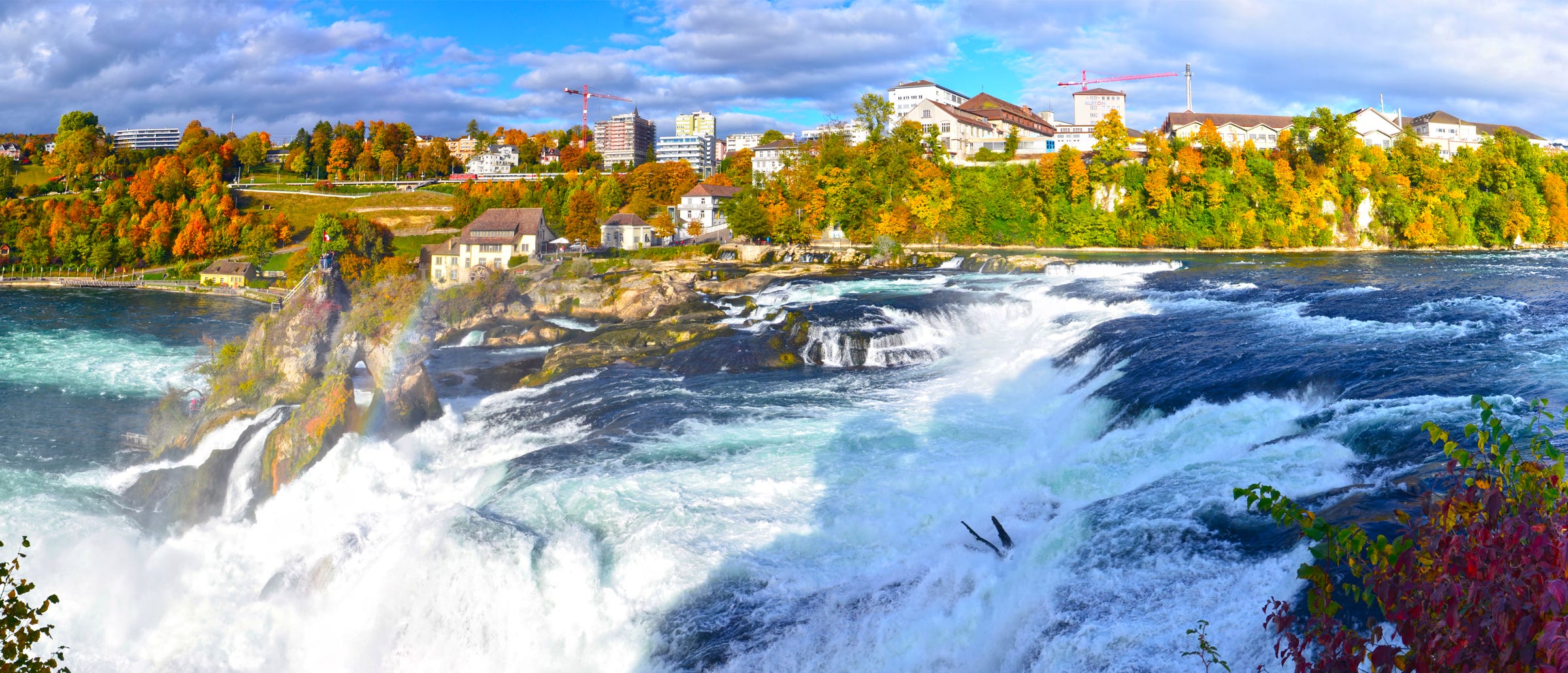
Rhine Falls | Switzerland
47°40′38″N 8°36′57″E
Earthview is a reader-supported publication devoted to climate change and the environment. Please consider a paid subscription to support the work we do and access premium content.
Good Climate News
1. EVs Overtake Petrol Cars in UK
Electric vehicles (EVs) have for the first time overtaken petrol cars in UK sales over a 12-month period, heralds Carbon Brief. The milestone was achieved in May.
The new analysis for the UK follows a similar milestone for the EU, with more BEVs having been sold in the month of December 2025 than petrol cars.
Outside the US, the EV revolution is happening more quickly than expected. –DB
2. Renewables Reach 30% of US Electricity
Renewables accounted for 30% of the United States’ electricity generation in the first quarter of 2026, notes Electrek. Wind and solar accounted for 21.8%, with hydroelectric power making up the remainder.
Renewables-generated electricity during the first four months of 2026 was 10.03% greater than in the same period in 2025…The electrical output of US coal plants fell by 11.6%, while nuclear power grew +0.5%. Electricity generated by natural gas plants grew by 2.8%.
3. Mega VPP Created to Power Data Centers
Three giant Virtual Power Plants (VPPs) have joined forces to power data centers, details Latitude Media. The new partnership from Sunrun, Renew Home, and Tesla will help the existing electric grid meet data center load growth, mitigating demand for new fossil-powered generation.
The three companies are planning to aggregate capacity from demand-side and energy-exporting devices, including home battery systems operated by Sunrun and Tesla, as well as smart thermostats operated and managed by Renew Home.
Book of the Week

Plastics cause environmental and health harms at every stage of their life cycle, from extraction and production to use and disposal. Even plastic recycling creates enormous damage and isn’t ‘green’ by any reasonable definition.
In this handy book, Judith Enck of Beyond Plastics explains how the plastics industry has flooded the Planet with its toxic product and outlines a plan to fight back with strict regulation and truly circular alternatives. A perfect primer on the topic! –DB
Buy Now: Bookshop.org 🇺🇸 | Bookshop.org 🇬🇧
In Brief
🇩🇿 Algeria: Germany has signed a deal to import green hydrogen from the North African nation.
🇧🇷 Brazil: The global craze for the psychedelic drug ayahuasca is driving concerns of overharvesting in its Amazon home.
🇨🇴 Colombia: One of the most pro-climate national leaders in the world has been replaced by a new president who wants to start “fracking to the max”.
🇺🇸 United States: Former NOAA employees have created a new website that replicates the functionality of the Biden-era climate.gov.
Planetary Pulse
Planetary Health — Latest figures
CO2: 430.78 PPM (+.34% YoY)1 | Temperature Anomaly: +1.42 C
Forest Cover: 31.8% | Protected Areas: 12.3% (17.3% terrestrial, 10.01% marine)
Emissions per Capita: 4.89 (World) | 9.1 (China) | 13.1 (USA) | 6.1 (EU) | 2.1 (India)
Low Carbon Electricity: 43.1% | Low Carbon Energy: 19.8% | EV New Sales : 24.1%2
The Other 74%
A marine expedition off the coast of Brazil has found 31 new species in only two weeks.
Unplugged offshore oil and gas wells are poisoning protected waters in the UK.
The European Union has pledged €338 million to fight illegal fishing, piracy, and ocean pollution globally.
Meet the Endangered
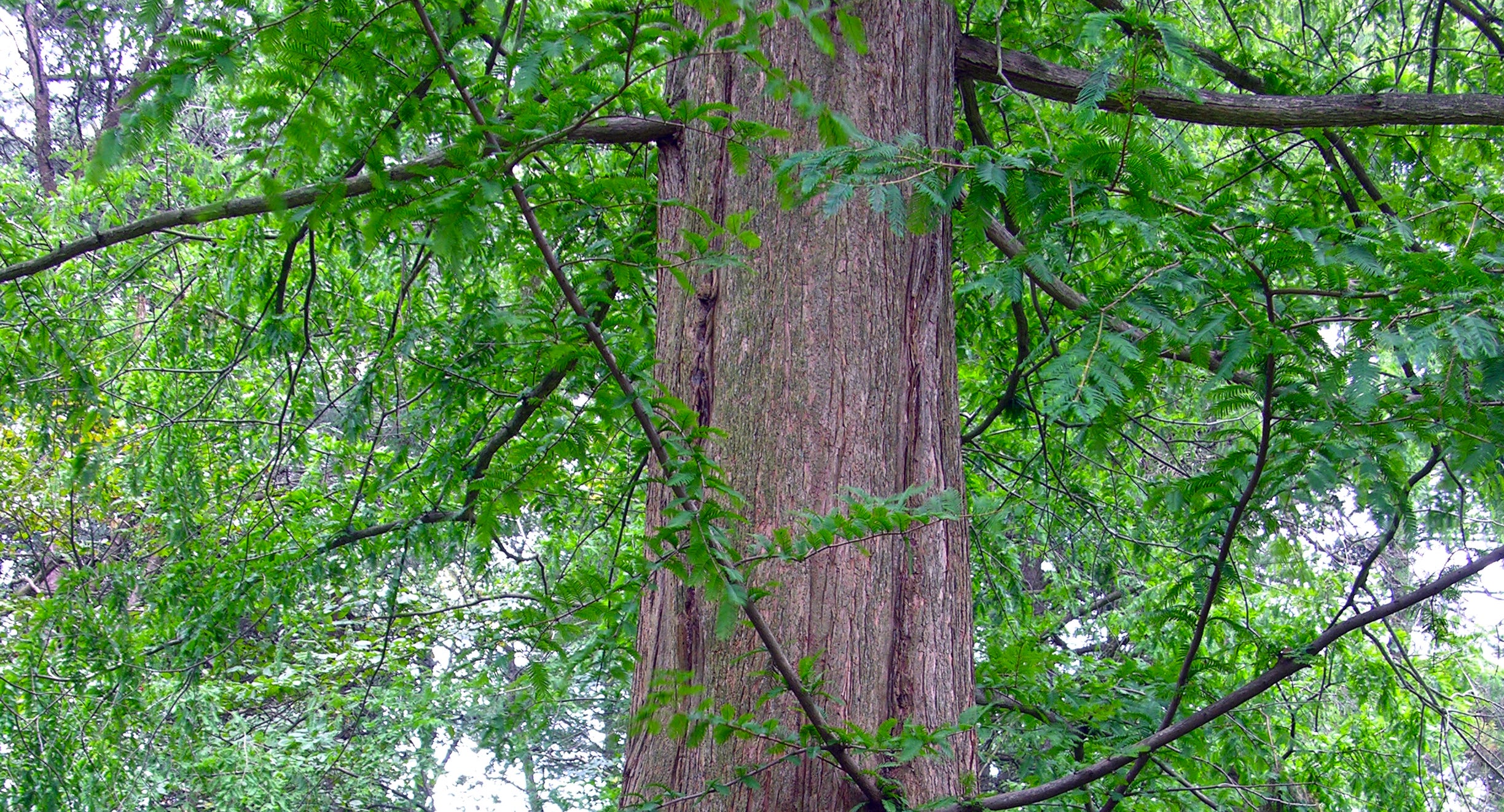
Dawn Redwood (Metasequoia glyptostroboides)
It has long been known that the giant redwoods and sequoias of California were the last remnants of a much larger redwood family, whose other members vanished from the fossil record tens of millions of years ago. So it came as quite a shock when, in 1948, one of these species - presumed extinct and known only from museum fossil collections - was found very much alive in south-central China.
The Dawn Redwood is shorter than its American cousins, growing to ‘only’ 51 m (167 ft) tall. It also grows much more quickly, reaching its mature height in about 50 years - compared to around 400 years for Giant Sequoias (Sequoiadendron giganteum). Both characteristics - along with its unusual status as a deciduous conifer that changes color in autumn - have made the newly resurrected species a popular ornamental tree around the world.
Ironically, so has climate change. The Dawn Redwood evolved at a time when temperatures and carbon dioxide levels were much higher. It is thus an excellent climate-resilient arboreal choice for parks or city streets.
Abundant elsewhere, this ancient tree remains endangered within its wild range due to habitat fragmentation and low genetic diversity. If it hadn’t been discovered and commercialized, this living fossil might have gone extinct in this century without anyone noticing.
IUCN: Endangered (EN)
Earthview is a reader-supported publication devoted to climate change and the environment. Please consider a paid subscription to support the work we do and access premium content.
Latest daily figures
Latest quarterly global percentage (BEV +PHEV)
I was left feeling I could never again complain about the weather being too cold after having suffered the record-breaking heatwave here in British Columbia in late June 2021, described by meteorologists as a ‘stalling dome’ of high heat, that resulted in 619 confirmed heat-related deaths.
According to AI Overview (on June 25, 2026): “The late June 2021 Pacific Northwest heatwave was caused by an atmospheric 'heat dome'—a persistent, high-pressure ridge that trapped hot air over the region like a lid. This stalling system shattered regional temperature records, with Lytton, B.C. reaching an all-time Canadian high of 49.6 C.”
And I didn't have a proper air conditioner back then; I only had a weaker system of temperature moderation known as evaporative cooling.
Then, quite incredibly, most of the province, including southwestern B.C., suffered some unprecedently cold days during the following January, which was described by meteorologists as a ‘stalling dome’ of freezing cold.
I doubt those extremes were just coincidental; rather, they are basically due to climate change via human-caused global warming via morbidly massive amounts of fossil fuel consumption ever since the Industrial Revolution.
… Whether it’s unprecedented heat waves, unprecedented wildfires due to unprecedented heat waves (e.g. B.C., 2021), far stronger hurricanes, more atmospheric rivers, record-breaking floods, wettest/hottest year on record, off-the-chart poor-air advisories, an exodus of sea life due to warming waters, the mass deforestation and incineration of the Amazonian rainforest, single-use plastics clogging life-bearing waters, a B.C. (2019) midsummer’s snowfall, etcetera — to date there clearly has been pathetically insufficient political courage/will to properly act upon the cause-and-effect of manmade global warming thus climate-change-induced extreme weather events.
Especially for those people most aware of them, manmade global warming and its resultant increasing number and intensity of climate-change-induced extreme weather events rightfully stir up alarm. Perhaps even for many of those people who purportedly distrust thus dislike climate science.
Yet, increasingly problematic is the very large and growing populace who are too overworked, worried and even angry about food and housing unaffordability for themselves or their family — all while on insufficient income — to criticize the fossil fuel industry, etcetera, for environmental damage their policies cause/allow, particularly when not immediately observable.
It does seem convenient for such very-profitable mega polluters, however.
There’s a continuance of polluting the natural environment with a business as usual attitude. Societally, we still discharge out of elevated exhaust pipes, smoke stacks and, quite consequentially, from sky-high jet engines like it’s all absorbed into the natural environment without repercussion. Out of sight, out of mind.